Building a fully antibiotic-free feed chain
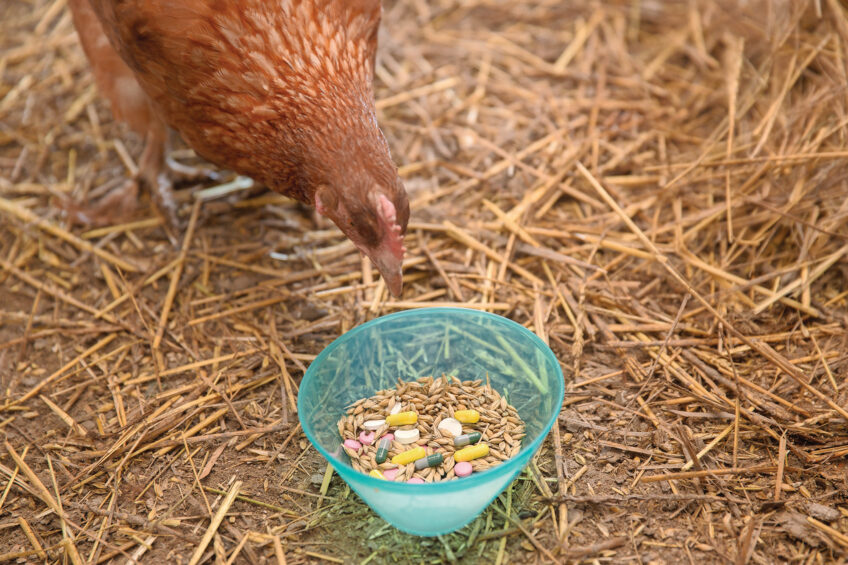
Antimicrobial resistance (AMR) threatens both humans and animals. Resistant bacteria can enter the human food chain through contaminated feed, affecting meat, milk and eggs. Low concentrations of antibiotics in feed, even in trace amounts, can foster resistant genes in bacteria over time and thus need to be prevented.
Antibiotic Reduction: Embracing best practices – read all articles
In the animal feed sector, there is an increasing need for companies to prove that they don’t just control antibiotic residues in their processes, but that their product is part of a feed supply chain that eliminates antibiotics from end to end – from sourcing and production to storage and transport. How to organise and safeguard such an antibiotic-free feed supply chain was a hot topic of discussion at the 2022 Global Feed Safety Summit. From that time onwards, GMP+ International – as the world’s largest scheme owner for safe and sustainable feed – committed to helping tackle the issue.

Role of independent certification
While it has been banned in the EU since 2006, in some market’s antibiotics are still commonly used in feed as growth promoters to accelerate animal growth and improve feed efficiency, contributing to AMR. GMP+ International launched an antibiotic-free standard in 2011, initially for companies supplying the Dutch market, where industry commitments were already in place. In elevating this to an international standard, it drew on lessons from that experience and worked with a range of experts to identify the modifications needed to give other countries access to the same opportunity.
The new international scheme (TS2.2 Antibiotic Free Feed) is now live and can help assure buyers and the public that the feed being given to livestock and aquaculture animals has gone beyond residue management and was, in fact, handled in an entirely antibiotic-free manner. To become certified, a feed company must first be GMP+ FSA certified, as this standard builds on other necessary safety outcomes. These companies then need to prove that no antibiotics are present or handled at their production facility at all, not even for other product lines. Certification applies at the level of the entire production site, not just an individual product or batch. This requires full physical separation from any operations that still use antibiotics.
An independent and qualified party is also required to take regular samples of the feed, and these are tested, usually using high-sensitivity LC-MS/MS analysis for any trace presence of antibiotics. Producers of feed materials, feed additives and premixtures can also be certified, and the scheme includes detailed controls on transport and storage, including when these are outsourced. For example, trucks that previously carried medicated feed must undergo enhanced cleaning before they can be used to transport antibiotic-free batches. With this additional certification, the supply chain can indicate via the GMP+ Company database that their products and work processes are antibiotic-free.
Challenging path
Demand for antibiotic-free feed is increasing globally, and the European Union have already legislated to limit the presence of antibiotics in feed. Nonetheless, the certification path can still be challenging, especially in regions where the GMP+ Community is still developing. In countries such as Vietnam and Thailand, for example, there may not yet be enough GMP+ certified suppliers of feed materials or feed additives for a compound feed producer to meet all the standards’ requirements directly.
To address this challenge, the Antibiotic Free Feed standard allows some flexibility without compromising the intended outcome. It can be used alongside equivalent schemes, as outlined in the TS1.2 Purchase Requirements. This approach helps bridge gaps in the international supply chain and gives companies in emerging markets a realistic pathway to certification. It also supports the wider goal of making safe, antibiotic-free feed available across borders, not just in countries where it is already widespread.
Full transparency
Despite limitations on their use in some markets, the use of antibiotics as growth promoters in animal feed remains a significant practice in various parts of the world. This scheme gives feed companies a way to respond to pressure from retailers and consumers, who are increasingly demanding full transparency about what goes into their food and how it’s produced. Feed certified under TS2.2 Antibiotic Free Feed helps livestock and fish farmers make credible claims about their commitment to public safety. For consumers, it means that the meat, dairy or eggs they purchase are part of a food system that is working to preserve the effectiveness of life-saving antibiotics. It’s one of the many critical efforts being adopted to help fight AMR. By adopting this standard, feed companies make a big difference and ensure that trace antibiotics in feed become one less thing for farmers and consumers to worry about.