German pig industry claims millions for welfare rule compliance
A total of 4 German pig industry organisations have called for a national support program to help producers comply with new animal welfare regulations. They are requesting €200 million annually until 2036.
As part of their proposal, sow farmers should receive subsidies covering up to 50% of their required investments. The program should be accessible to all sow farmers through a straightforward application process with no additional requirements.
Industry groups unite in call for national support
The demand for such a support programme has been put forward by the German Livestock Association (BRS), the German Farmers’ Association (DBV), Deutscher Raiffeisenverband (DRV) and the German pig farmers’ organisation ISN.
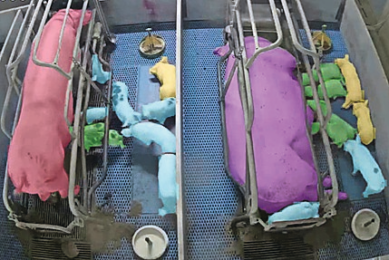
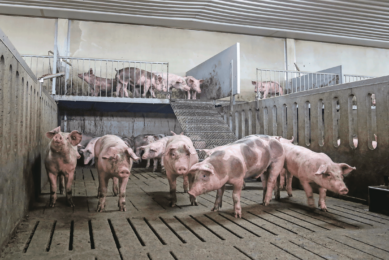
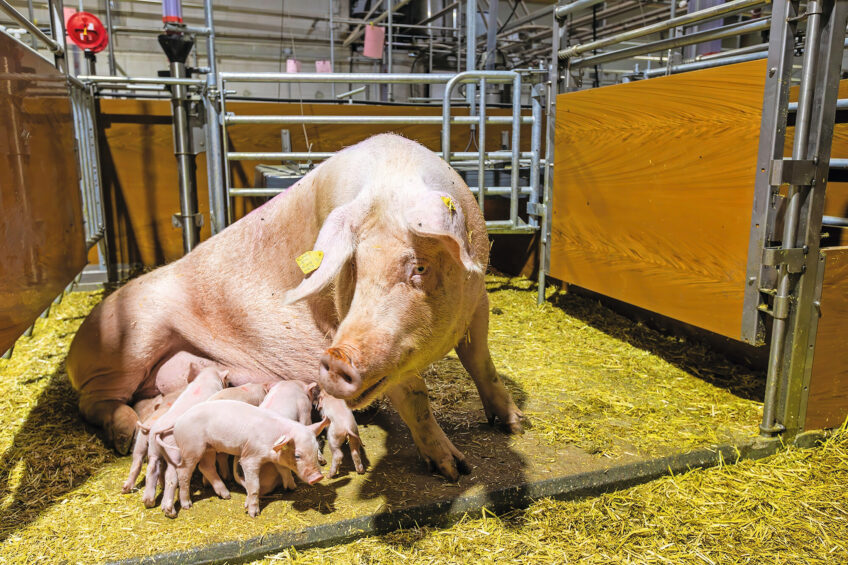
As from 2029, German pig producers will no longer be allowed to keep their sows in mating stalls. Furthermore, by 2035, free farrowing pens will become the required standard.
Earlier in 2026, ISN calculated the total costs for the conversion of both breeding and farrowing areas at almost €4,000 per sow place, resulting in a total bill of €4.4 billion for the national pig sector. ISN wrote, “Many producers have indicated that they cannot afford the costs associated with the transition and hence, they are intending to give up.”
Without immediate and adequate national support, Germany risks losing its domestic piglet production—and with it, years of progress in animal welfare.
Industry warns of structural decline and relocation risk
The organisations jointly wrote, “Without targeted financial support, there is a risk of dramatic structural change and the loss of significant parts of German piglet production. Medium-sized farms are faced with individual investments of around €1.5 million – with no prospect of higher revenues or efficiency gains. Often, they can only comply by reducing the number of piglets, which is in direct contradiction to the country’s goal of food security. Without support, piglet production threatens to move abroad.”
The 4 associations emphasise that a patchwork of different subsidies from the separate German states would be ineffective. They say, “Only a national special programme ensures planning security and prevents Germany from going it alone in terms of husbandry requirements leading to a massive structural decline in sow farming.”
Destroying efforts to improve animal welfare
ISN managing director Dr Torsten Staack said, “Without an adequately equipped national special programme, the wave of leavers in piglet production will be dramatic. A loss of German piglet production in favour of piglet imports will destroy all efforts to improve animal welfare in this country and at the same time means the loss of valuable structures in the producer chain and the upstream and downstream economic sectors.”
He continued to say, “Piglet producers cannot cope with the huge sums of investment alone – they do not have the prospect of higher revenues.”
Join 18,000+ subscribers
Subscribe to our newsletter to stay updated about all the need-to-know content in the pigsector, three times a week.