German pig farmers upbeat about 2-level pens
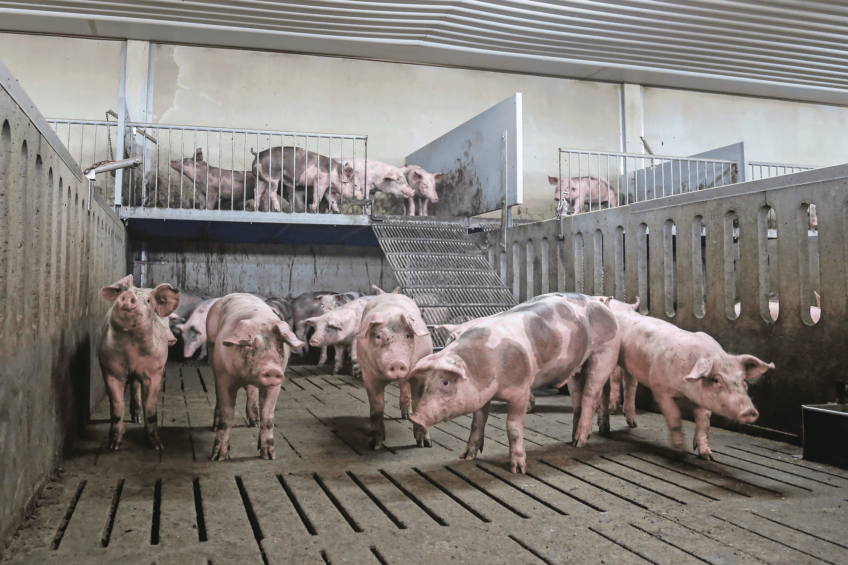
In a German survey, most swine producers said they were satisfied with the use of 2-level pig pens and would choose the system again.
The survey was part of a wider study carried out by a team of scientists at Germany’s federal research institute for animal health, the Friedrich-Loeffler-Institut (FLI). A 2-level pen, which includes an additional raised platform, could serve as a structural element and create additional space for pigs. The scientists at the institute concluded, however, that the extent to which this type of pen affects the animals’ health and behaviour remained unclear. This was one of the reasons for investigating the question, as reported by Germany’s agricultural title Top Agrar.
In their study, the team focused on 6 rearing farms and 3 finishing farms. At each farm, they examined up to 5 pens, each containing 16-35 rearing pigs or 49-160 finishing pigs.
Platforms in pig houses are rated positively
The team conducted a one-time assessment of the use of the pens and the raised platform, as well as the level of soiling in all pen areas. They also surveyed the producers about their practical experience with the raised platforms.
The team came up with a range of results, as summarised by Top Agrar:
- In the rearing pens, the raised platforms covered up to 25-45% of the floor space, in the sense that they formed a “roof” for that amount of the floor space. In the finishing pens, the platforms covered 15-40% of the ground-level area;
- More than half of the farmers provided enrichment materials such as toys or straw on the raised platform;
- During a one-off observation, an average of 15.2% of the rearing pigs and 2.2% of the finishing pigs were seen on the raised platform;
- In the rearing pens, the area of the raised platform was soiled on average by 13%, while the area below the platform was 20% soiled. The uncovered pen area was significantly cleaner, with only 1% soiling;
- In the finishing pens, all 3 areas were soiled by an average of 15%;
- Producers rated the effect of the raised platforms on air quality in the pens, as well as on feeding, behaviour, and the health of the pigs, as “rather positive” to “positive”;
- The producers rated the impact of 2-level pens on animal inspections and pen cleaning as significantly worse; and
- Overall, the majority of farmers indicated that they would install the raised platforms again.
Conclusion
All in all, the pig producers in the FLI survey who use raised 2-level pig pens rate their use positively and would install them again. The platforms help the animals structure their pens, i.e., create dunging areas. It remains unclear whether the area of the raised platforms can be counted towards the unrestricted usable floor space according to the Animal Welfare Ordinance for Livestock Husbandry.
The research was funded by Germany’s Federal Office for Agriculture and Food (BLE).
Join 18,000+ subscribers
Subscribe to our newsletter to stay updated about all the need-to-know content in the pigsector, three times a week.