Westfleisch: Research to reduce the carbon footprint of pork
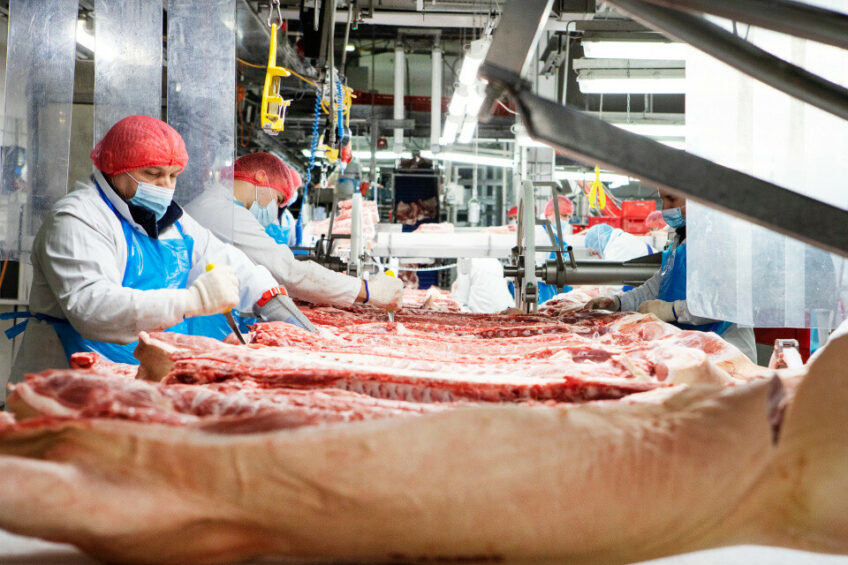
German meat processor Westfleisch has launched a 3-year research project, called InnovationPork, to reduce the carbon footprint of pig production. Wilhelm Uffelmann, chairman of the cooperative’s board, announced this during an information evening for members.
The aim of the project is to offer pig farmers opportunities to reduce the environmental impact of their farms without sacrificing margins.
Research and practice are collaborating in the project. Various institutes are participating from the scientific perspective. Other research partners include the animal nutrition company Agravis, breeding organisation Topigs Norsvin, and 2 pork product trading companies. Two recently graduated Westfleisch employees will be in charge on behalf of the processor.
Reducing environmental impact
For meat companies, reducing their environmental impact is essential. Uffelmann said, “Our customers have set ambitious goals and are demanding action from us. We will take the lead in this process. This way, we want to prevent the pig sector from being forced to implement measures from outside the industry that don’t work in practice.”
The target for producers delivering to Westfleisch is a 42.4% reduction in their carbon footprint by 2034. Uffelmann said, “That’s just 8 years away.”
Developing calculation models
Around the globe, CO2 footprints tend to get calculated in many different ways, on the basis of widely varying assumptions. Emission factors can thus range from 1.3 to 8.4 kg of CO2 emissions per kg liveweight, Westfleisch claimed. The processor aims to develop calculation models to compare various emission calculations. Ultimate goal: preventing competitors from “outperforming” using inaccurate carbon footprint figures.
Uffelmann began his presentation by explaining that the carbon footprint of meat consumption is relatively small. He said, “I certainly do not want to downplay it. But the emissions of a person who eats meat for a year are less than those of someone who flies to Palma, Spain, and back for a sunny holiday.”
In Uffelmann’s calculations, the average annual footprint is 10.4 tons of CO2 equivalents per capita. Of that, 15% is attributable to food and less than 1% to pork.
Join 18,000+ subscribers
Subscribe to our newsletter to stay updated about all the need-to-know content in the pigsector, three times a week.