Aligning piglet nutrition with natural needs
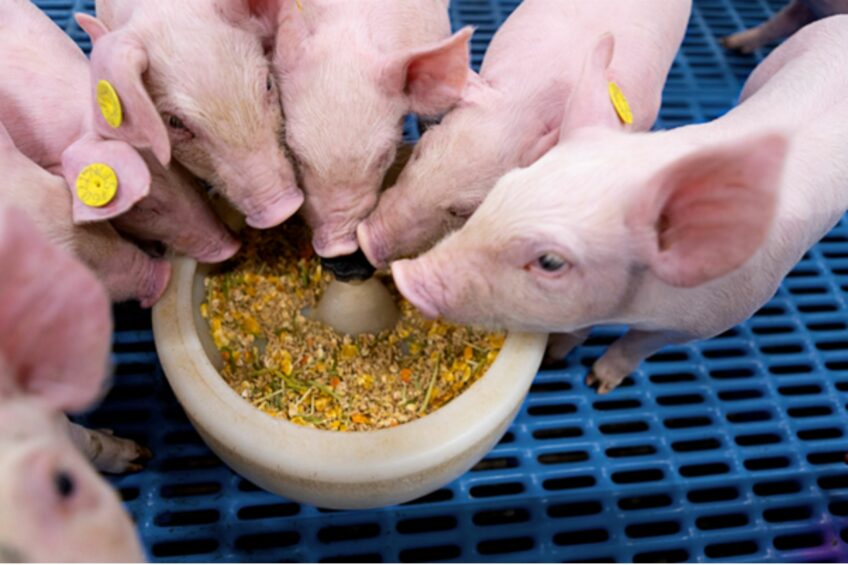
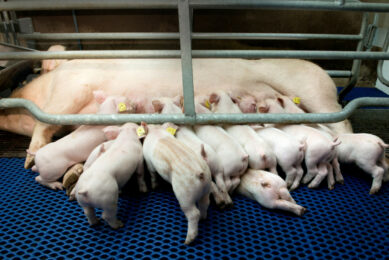
Playing, rooting, and chewing on feed is perfectly normal and natural for suckling piglets. However, conventional pre-starter pellets or meals don’t stimulate these instincts. A new pre-starter is set to change that.
Enrichment (straw, toys) helps pigs better express their natural behaviour. Nutrition also plays an important role here, especially in young piglets. Historically, the focus of pre-starter nutrition was to formulate the most palatable pellet possible to stimulate early feed intake. Today, we take more into consideration, leading to more focus on the interaction between feed composition (what is in it) and feed management (the form of how the feed is presented).
Pioneering research around this topic has been done by Anouschka Middelkoop, who completed her PhD research on this topic in 2020 at Wageningen University. In her research she showed that stimulating foraging behaviour in young piglets is important to encourage the animals to quickly start eating after birth.
Changing the narrative
The research from Middelkoop has changed the narrative about feeding suckling piglets, especially around the selection and balance of certain nutrients. For many years, pre-starters were produced with the understanding that it should resemble the composition of milk as closely as possible, to stimulate feed intake and meet the piglets’ needs. In other words, use pellets that are high in lactose and low in (inert) fibre, based on the assumption that piglets only like sweet flavours and cannot handle a lot of fibre.
But certain fibre sources during suckling are actually essential for early digestive tract and microbiome development. Also feed form and structure seem to be more relevant for piglets than initially thought, as research showed that enriched feed with different structures contributes to natural eating and playing behaviour. And this, in turn, is very important for development and feed intake.
Furthermore, the amino acid ratio in sow milk doesn’t always meet piglets’ growth potential, especially in the final phase of suckling and some amino acids, crucial for gut development and immunity, are also lacking in milk. Under natural conditions, piglets forage to obtain these amino acids to meet their needs.
New enriched pre-starter
All the new insights have prompted Cargill Animal Nutrition & Health (Cargill ANH) to reformulate and reposition its pre-starter portfolio. The icing on the cake is a new enriched pre-starter feed that combines a pellet with several other textures and flavours.
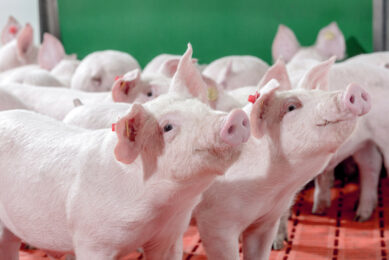
Trials with this new enriched pre-starter feed demonstrated that very young piglets (at 1 or 2 days of age) are the first to dive on the small pieces (sprigs) of alfalfa. The trials showed that rather than eating it all right away, the piglets start playing with it and chew on it. This stimulates salivation and enzyme development and lowers the threshold to ingest solid feed.
In larger litters, the studies showed that piglets are keen to quickly pick out the little pellets in the mix, which contributes to their energy needs. At week 3-4, piglets eat pretty much everything in the enriched feed. And that is the beauty of it. Piglets instinctively and physiologically know what they need and that is what they select first to eat.
The enriched feed from Cargill ANH also contains savoury flavours. Savoury flavours were previously mainly used in weaner diets, but young piglets also encounter savoury flavours in nature (e.g., insects) and actively look for them. These flavours have a positive effect on salivation for example.

A dynamic interaction
Supplementary feeding of young piglets is becoming the new norm as we realise that it contributes to healthy and smooth weaning. For pig nutritionists this means to think more outside the box here and move away from the theory that there is only one type of feed before weaning and one for use after weaning. It is all about finding the best route to produce strong and resilient piglets at the time of weaning, facilitate a smooth transition between the different diets used.
In the trials done by Cargill ANH, it was demonstrated that providing a diverse pre-starter doubled the number of eaters at 11 and 19 days of age, and increased feed intake from 10 days of age by 46%. Pig farmers who use the new enriched feed confirm this, reporting better pre-starter and post-weaning feed intake levels, more eaters (even the small piglets eat more) and less disease pressure and diarrhoea after weaning. Weaning diarrhoea obviously has several causes, but nutrition helps in the overall approach to prevent several diseases and disorders.
By aligning pre-starter nutrition more closely with piglets’ natural behaviours and physiological needs, the sector is taking an important step toward healthier, more resilient animals. The new enriched pre-starter from Cargill ANH demonstrates how thoughtful feed composition and structure can stimulate early exploration, promote digestive development, and support a smoother transition at weaning.
Join 18,000+ subscribers
Subscribe to our newsletter to stay updated about all the need-to-know content in the pigsector, three times a week.