Pig market and welfare debated at British Pig & Poultry Fair
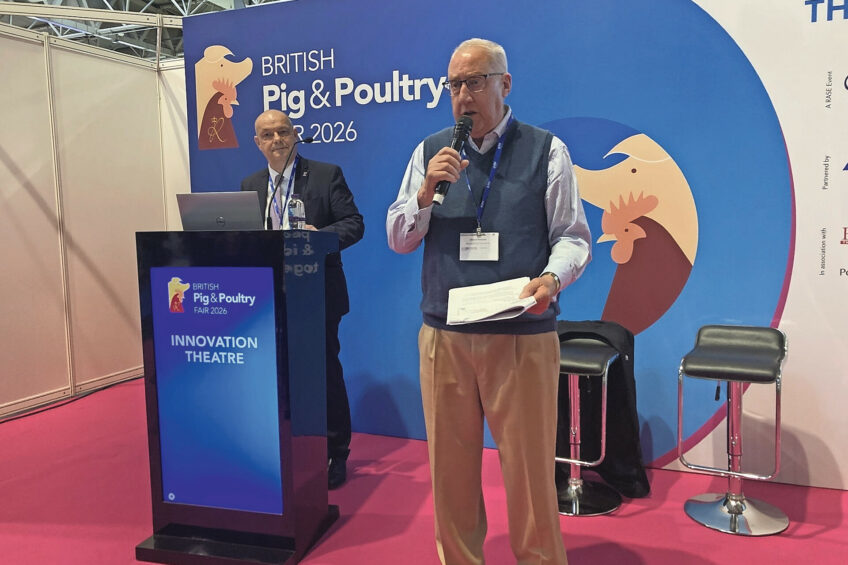
Tricky domestic market conditions, fears of growing pressure from animal welfare groups and how to better export pigmeat. Those were some of the key issues discussed at this year’s British Pig & Poultry Fair , held 10–11 May 2026.
First of all – the United Kingdom’s pig backlog, dating back to the autumn of 2025, is proving difficult to shift. It prompts processors and supermarkets to take action to help restore confidence. The issue was sparked by some significant processing plant stoppages. Ongoing unreliability alongside falling prices and rising costs has led some producers to struggle to cope with rising numbers on farm.
Some producers have been given notice by processors – either being dropped or having reduced numbers – which is coming into effect in the remainder of 2026 or early 2027. Figures suggest that pigmeat production in the 1st quarter of 2026 was 5% higher than the same period last year but demand has been flat.
Reducing the pig backlog
Fabio Brancher, operations director at meat processor Pilgrim’s Europe, said that to reduce the backlog the company had increased the abattoir killing time by 30 minutes each day in recent weeks along with 9 extra Saturday kills. As a result, up to 48,000 pigs were being culled in abattoirs per week compared to the average of 43,000.
He said, “We are trying to reduce the backlog. We are trying to hold more pigs on our farms to reduce the problem for the third parties and put more pigs in our abattoirs”.,
Agreeing that the situation was not good for British farmers or consumers, Brancher said Pilgrim’s was putting carcasses in stores and sometimes selling some of the pigmeat for low prices, adding the issue should be resolved in a few months.
Pig producers may reduce herd sizes
Lizzie Wilson, National Pig Association (NPA) chief executive, said it was difficult to know what will happen in 6–12 months. ‘We are talking about it all of the time. Will supply have tightened enough or demand gone up enough? We may have lost producers and others may have reduced herd sizes too.’
Wilson questioned whether some of the contracts will be renewed if the market situation is better.
New pig contract regulations
The issue comes at a time when the sector is about to be faced by the Fair Dealing Obligations (Pigs) Regulations 2025, which will come into force on 13 August. It is requiring all new pig purchase contracts to be written, signed and include clear terms on pricing, duration, termination and dispute resolution. The regulations aim to improve how contracts operate, protect them from unfair practices and give them more control over how they sell their pigs.
Wilson told producers that they should ensure their processors are contacting them with regard to their contract as they are legally obliged. There is limited evidence that large-scale contract terms are being breached.
Brancher said more than 90% of the company’s third-party farmers had signed the new contract and expected all to be compliant by the 13 August deadline. The company is looking for long-term 20-year contracts with producers.
Retailer Tesco has also this month expanded its Sustainable Pig Group (TPSG) as it continues to increase its sourcing of British pigs. It will mean that the number of pigs covered by the group will rise by 30%, with Sofina Foods Europe joining Cranswick as a supplier. TSPG will now cover around 23% of Tesco’s British pork supply and 15% of its total pig meat supply.
Traceability and welfare
Red Tractor is a British quality mark, a farm assurance programme for food products, animal feed and fertiliser. Red Tractor pig sector chair Stewart Houston presented the upcoming standards for those keeping pigs. Feedback from across the event highlighted a clear priority: standards must remain robust while also being proportionate and reflective of modern farming practices. Getting this balance right was key to supporting producers while continuing to deliver consumer confidence.
Red Tractor is particularly concerned about the increased risk of coordinated action by activist groups targeting UK pig farms and a key panel discussion looked at how the pig sector should respond.
Nuffield Scholar and former BBC Farming Today correspondent Anna Jones spoke about the establishment of Just Farmers, a network organisation of more than 150 farmers using their voice for positive change in UK farming.
Pig producer Fred Allen, who also has sheep and an arable unit, said the biggest challenge was ‘not production but perception’ and overcoming narratives that portrayed agriculture as a negative industry. Allen said he can’t sit back and do nothing so spends time producing footage to explain the work of the sector to the public.
Exports
Speaking at a session on UK pigmeat export opportunities, Susanna Morris, senior trade development manager for the British Agriculture and Horticulture Development Board (AHDB), spoke of the importance of developing and establishing strong relationships to build trust and credibility.
Morris said the AHDB was continuing to look for new export markets to maximise all aspects of the carcass. While loins, shoulders and legs are easy to market, more attention was being made to offal and feet to meet different needs for different countries.
For example, the UK is trying to tap into the Mexican market for pig stomachs; the Chinese love of feet and the export of jowls to the Philippines. She highlighted the increase in exports to the Dominican Republic in recent years, driven by the country’s growing demand and the UK’s reputation for high quality pork.
Exporting bacon and sausages to Asia
Fergus Howie, managing director of Wicks Manor, a family run business in Essex, talked about how his company has been exporting bacon and sausage to supermarkets in Dubai, Hong Kong, Singapore, Malaysia, Thailand, Brunei, Taiwan and Japan over the past decade.
Howie said the support of AHDB and UK trade representatives linked to embassies around the world was vital in gaining orders, alongside the credibility of UK pork, with its traceability, high animal welfare standards and no hormones.
Launch of environmental roadmap
Both the AHDB and NPA highlighted the launch of the Environmental Roadmap, which shows how the pig sector has reduced its carbon footprint by 18% between 2008 and 2023, mainly through long-term advances.
Emissions linked to land use and land-use change dropped by 71%, showing how improvements in feed sourcing and pig diet formulation have made a huge impact.