British pig association questions statistics in ammonia map
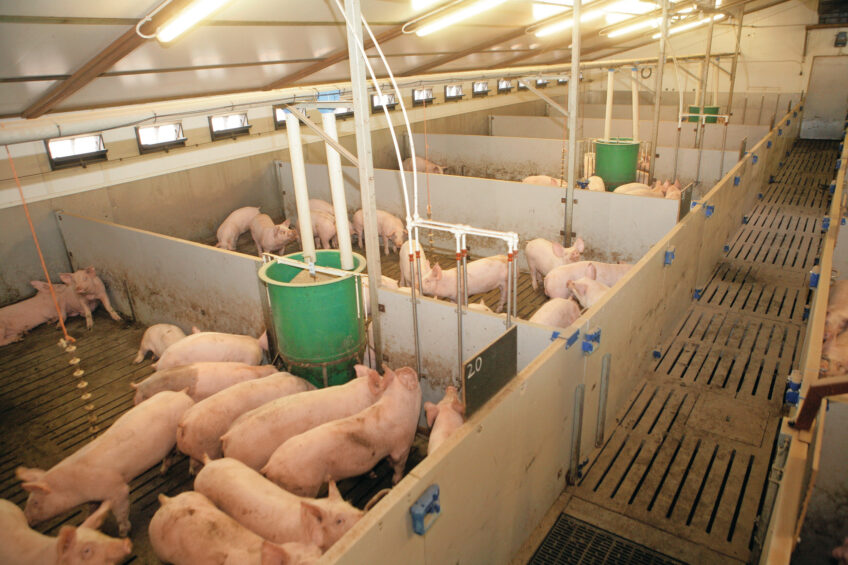
The National Pig Association (NPA) in the United Kingdom has questioned a recently published map in a report on ammonia emissions in the British pig and broiler industries.
The industries have come under the spotlight in a new interactive ‘Ammonia Map’, which has highlighted the large amounts of emissions that were said to be stemming from farming. Counties like Lincolnshire, Herefordshire and Norfolk – all areas of intensive poultry and pig production – were shown to have the most severe concentrations of ammonia emissions.
‘Substantial progress in cutting ammonia emissions’
Lizzie Wilson is chief executive of the NPA. In a response to the report, she said that the pig sector was making substantial progress in cutting ammonia emissions and questioned some of the statistics. She acknowledged that the pig sector “has a responsibility to ensure its impact on air quality is as limited as possible.”
She said the NPA would question how the data for the ammonia map was derived and what it includes, given that it “doesn’t appear to directly correspond with the type of production the report claims.”
Wilson noted: “The pig sector is, by way of various environmental legislation, including environmental permitting, one of the most highly regulated sectors within agriculture and as such, it specifically only accounts for 8% of total UK ammonia emissions.”
A gradual fall of overall ammonia emissions since 1990
Trials by the Agriculture and Horticulture Development Board (AHDB), which focused on actual rather than average emissions, were accepted by the Environment Agency and showed an average reduction of 50% over 10 years across different housing types.
Wilson pointed to the UK Department for Environment, Food and Rural Affairs (Defra) and said, “According to Defra, ‘the fall in emissions from livestock other than cattle, especially from the pig and poultry sectors, is the main driver in the gradual fall of overall ammonia emissions since 1990. This can be partly explained by the Pollution Prevention and Control Act (1999) making all new intensive pig and poultry installations subject to ammonia controls through permitting.’”
She added: “The UK is only approximately 60% self-sufficient in pig meat with a significant proportion imported from countries with lower animal welfare and environmental/ sustainability standards in comparison. We have continued to improve our efficiency and therefore our carbon footprint by producing greater quantities of pigmeat from a declining national sow herd to meet the demand of a growing population. We will continue to engage with government on emissions and ensure, as always, we are fulfilling our responsibilities regarding our sector impact on air quality and the wider environment.”
Background of the ammonia map
The map was produced by animal welfarist organisation Compassion in World Farming (CIWF) and Sustain. It is part of a report, ‘The Ammonia Pollution Problem’, which claims that while ammonia may be essential for food production, levels being released are beyond what ecosystems can absorb.
The report said UK agriculture is responsible for 89% of national ammonia emissions, and that as UK farming has intensified, so has the scale of the harm. Once released into the air, ammonia reacts with other pollutants to form fine particulate matter (PM2.5), which have been linked to serious health issues, such as heart disease, strokes, lung cancer and asthma.
Ammonia and nitrogen issues
Not only in the UK, ammonia and nitrogen emissions by the respective livestock industries are under scrutiny. In recent years, the livestock industries in Belgium, the Netherlands and Denmark have also faced criticism, with serious pleas to reduce the size of the existing livestock industries.