

U.S. Soy helps pigs beat summer heat
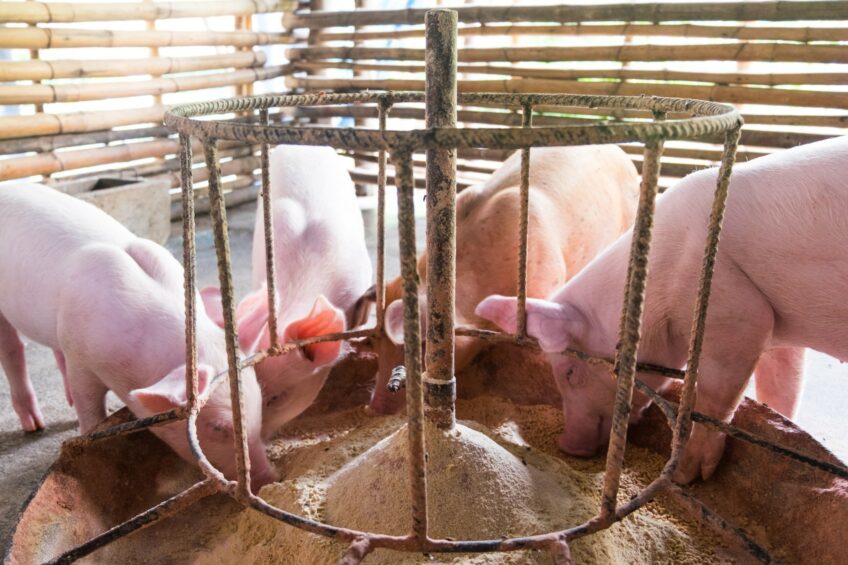
Every summer, your operation faces a costly and familiar challenge: carcass weights decline by an average of 2.7 to 5.4 kgs per pig, primarily driven by heat stress. That might sound manageable, until you add it up across a full season. The estimated annual industry loss reaches a staggering US$450 million.
The issue goes deeper than temperature. Pigs naturally reduce feed intake during heat stress to lower metabolic heat production. Many standard feed formulations compound the problem. Ingredients like corn dried distillers’ grains, wheat middlings, and corn germ meal that are commonly used in grow-finish diets will suppress feed intake even further. This nutritional compounding effect limits growth just when your pigs should be finishing strong, often during peak market prices in July and August.
High-energy diets fortified with fat were once a practical response, but today’s fat prices make that approach economically unrealistic. As a result, nutritionists and producers are looking for ways to maintain summer performance without breaking the feed budget.
Rethinking the role of soybean meal
Recent nutrition research and field trials point to a strategic solution that is all too often overlooked: soybean meal derived from U.S. Soy. While soybean meal is widely recognised as a high-quality protein source, its value extends beyond protein. The non-protein fraction of soybean meal contains valuable bioactive compounds, including polyphenols, terpenoids, peptides, and functional fibres, that can support gut health, immune function, and growth during stressful periods. Unlike dried distillers’ grains and similar byproducts, soybean meal does not suppress feed intake.
“The persistent inferior carcass weight decline during the summer months remains a critical issue in the industry,” said Dr R. Dean Boyd, a consultant for Nutrition Research, LLC, in a recent Swine Nutrition Blackbelt Podcast episode. “That decline in carcass weight and resulting financial losses during this period can be greatly minimised with the strategic use of higher levels of soybean meal in grow-finish diets.”
Dr David Rosero, assistant professor of animal science at Iowa State University, echoed this recommendation: “You need to find the optimal level of soybean meal to support growth performance. Our field trials showed that diets high in soybean meal, with no dried distillers grains or added fat, delivered the best performance and profitability during the summer.”
A consistent, profitable summer strategy
A summer feeding programme that prioritises soybean meal over dried distillers grains and other feed-intake-reducing ingredients offers a consistent, sustainable, and profitable approach to warm-weather nutrition. Field trials demonstrated the following results:
- An average gain of 2.5 kgs per pig, even during peak summer stress
- Lower overall feed costs through elimination of expensive fat supplementation
- Improved immune support and nutrient efficiency
- Up to US$14 more revenue per pig, based on 2022 market prices
Timing matters as much as formulation. “You need to start feeding those pigs for summer in the spring,” said Rosero. “That way, by the time the heat hits, their diets are already optimised to maintain growth.”
These findings are part of the Soy Effect research series funded by the United Soybean Board, which explores the nutritional and economic value of soybean meal in livestock diets. Learn more at soyeffect.ussoy.org.
The farmer behind your feed
The consistency of your operation begins long before the soybean meal reaches the feed mill. U.S. soybean farmers are stewards of the environment and leaders in sustainable farming, always working to grow more while using fewer resources. Their practices – including conservation tillage to enhance soil health and crop yields, planting cover crops to build organic matter, carbon sequestration, precise nutrient application, and responsible land stewardship – deliver the consistent, high-quality crop your operation depends on, with exceptional year-to-year reliability in nutrient composition and digestibility. Soybean meal derived from U.S. Soy nourishes your pigs through summer’s most demanding months. Plus, it nourishes your business year-round.
Soybean meal delivers when it matters most
For producers working to protect carcass value in summer markets, reduce the environmental footprint of their diets, and maintain consistent performance under heat stress, soybean meal is an effective heat-season management strategy. By focusing on profit margin over ingredient cost and making smarter formulation choices, you can turn the summer performance dip into a summer opportunity. That’s what it means when U.S. Soy nourishes your business.
What’s nourishing your business?
References are available on request.
Join 18,000+ subscribers
Subscribe to our newsletter to stay updated about all the need-to-know content in the pigsector, three times a week.