“Superglue” enhanced vaccine looks promising for pig coronaviruses
Scientists based in the United Kingdom have tested a newly developed vaccine platform that could transform how coronaviruses are controlled in livestock.
The researchers are attached to The Pirbright Institute, The University of Surrey, biotechnological company SpyBiotech and the UK Health Security Agency. Their findings were recently published in the peer-reviewed journal Vaccine.
Coronaviruses in pigs
Pigs are susceptible to various coronaviruses, which can cause disease or lead to death. Some types of porcine coronaviruses can be transmitted to humans, which is why understanding and controlling coronaviruses in pigs might also benefit humans.
That was the background of an initiative by researchers to use a natural pig model of respiratory coronavirus infection to evaluate a novel type of vaccine.
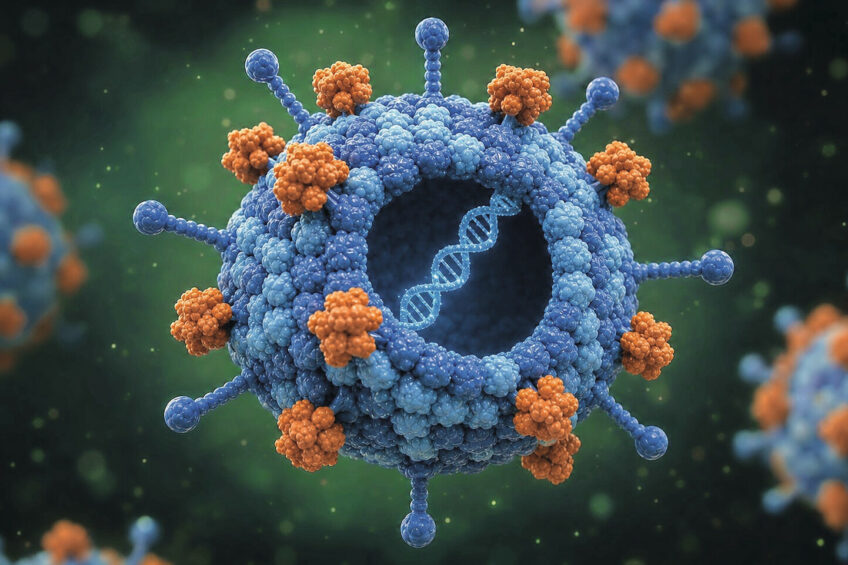
Pirbright communicated about this research in a news release, explaining that “the researchers’ approach was based on a replication-defective adenovirus vector – an engineered DNA virus used in biotechnology to deliver genetic material, such as a gene or a vaccine antigen, directly into the target cell. The platform is enhanced using a molecular “superglue” system, allowing viral proteins to be displayed also on the surface of the vaccine particle.”
Reducing viral load
According to the news release, the team showed that vaccines encoding key coronavirus proteins, Spike (S) and Nucleocapsid (N), were highly effective in pigs, significantly reducing viral load and almost completely preventing lung damage following infection. When the vaccine particles were “decorated” with an additional spike fragment, known as the receptor-binding domain (RBD), immune responses improved, the news release explained.
Animals receiving the decorated vaccine showed stronger neutralising antibody responses in both blood and lung samples, along with indications of reduced viral shedding from the upper respiratory tract, suggesting potential to limit transmission.
Adenovirus constructs
As coronaviruses in pigs can be diverse, the team tested a “cocktail” vaccine combining 3 different adenovirus constructs, each displaying RBDs from distinct porcine coronaviruses. This multivalent strategy successfully generated robust antibody responses against all targeted viruses, demonstrating potential as a broadly protective approach.
Currently, there are no licensed vaccines for several important pig coronaviruses, including Porcine Hemagglutinating Encephalomyelitis virus (PHEv) and Porcine Deltacoronavirus (PDCoV).
Value of the pig as a large, natural host model
Prof Elma Tchilian, Pirbright’s group leader in Mucosal Immunology, who led the research, was quoted as saying: “Our study highlights the value of the pig as a large, natural host model for studying respiratory coronavirus infections and testing vaccine strategies. The findings offer insights to inform the development of next-generation vaccines for emerging human coronaviruses. By combining strong antibody and T-cell responses with a flexible and scalable platform, our approach may help address the ongoing challenge of viral evolution and immune escape.”
Generating protective immunity
Dr Matthew Dicks is group leader at SpyBiotech, described as a “clinical-stage biotechnology company developing novel vaccine platform technologies to target infectious diseases, cancer, and chronic diseases.” The company was spun out of the University of Oxford in 2017; its platform is built on a proprietary protein “superglue” technology, binding antigens to vaccine delivery platforms.
In the news release, Dr Dicks was quoted as saying: “This study showcases the ability of our decorated-adenovirus vaccine platform, SpyVector, to generate potent, protective immunity in a large animal model, delivering stronger antibody responses than conventional adenoviral vaccines.”
“We were particularly encouraged by the reduced viral burden observed in the upper respiratory tract, suggesting the platform could support efforts to reduce transmission of respiratory pathogens. Highly versatile by design, SpyVector can be deployed against a broad range of infectious agents in both prophylactic and therapeutic vaccine applications.”
Join 18,000+ subscribers
Subscribe to our newsletter to stay updated about all the need-to-know content in the pigsector, three times a week.