Researchers create pigs resistant to Classical Swine Fever
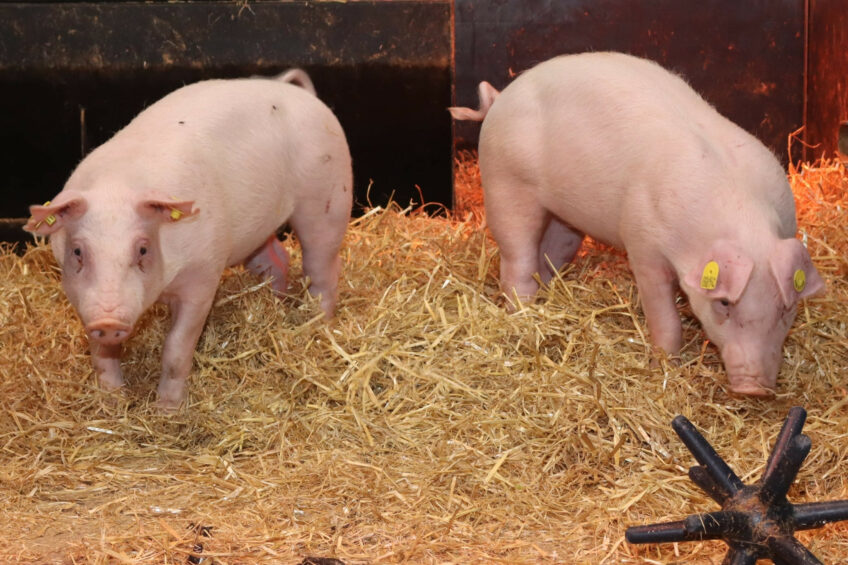
Researchers from the UK and Germany have announced to have developed pigs that are resistant to Classical Swine Fever.
The work was carried out by a team from The Roslin Institute, part of The University of Edinburgh, in Scotland, UK, assisted by researchers from the Animal and Plant Health Agency (APHA) in Weybridge, UK, and scientists from the University of Lübeck in Germany. The team used gene-editing technology to alter a protein which the virus depends on to make copies of itself in the pigs’ cells.
Gene-edited pigs remained unaffected
The gene-editing technology used was CRISPR/Cas9 technology. In a news release, the Roslin Institute explained that the gene-edited pigs exposed to CSF remained unaffected, while unedited animals showed clear signs of disease. This genetic change offered complete protection from infection without any observable negative effects on the animals’ health or development, and researchers believe the gene-edited pigs would be very unlikely to spread the virus to other animals.
The institute wrote: “Before producing gene-edited pigs, researchers worked with collaborators to study how a group of viruses including CSF, collectively known as pestiviruses, interact with pig cells. The team focused on a key pig protein (DNAJC14), that had previously been shown to play an important role in the virus replication process when studied in cultured cells. In lab studies using these cells, altering the gene that produces DNAJC14 prevented the virus from reproducing.”
The institute’s news release continued to say, “This suggested that making the same genetic change in live animals could produce livestock resistant to these viruses. Researchers made a precise change in a region of the DNAJC14 gene in pig embryos, preventing the virus from using the pig cells to produce all of its own viral proteins. The embryos were then implanted into surrogate mothers, and once the pigs reached adulthood, the research team exposed these gene-edited pigs to CSF virus.”
The pigs’ health was monitored over several weeks, but no signs of viral infection were noticed in the edited animals. The control animals however showed typical signs of infection.
Growing potential of gene editing in livestock
Dr Simon Lillico, core scientist at The Roslin Institute, commented, “Our research highlights the growing potential of gene editing in livestock to improve animal health and support sustainable agriculture.”
Indeed the development bears resemblance to a recent development in which pigs had been gene edited to no longer be susceptible to Porcine Reproductive and Respiratory Syndrome (PRRS). That concept is now being taken to market by genetic company PIC. The research group at The Roslin Institute played a role in getting that concept going as well.
For the pigs resistant to CSF, it is too early to hit the market. In the basic research paper, it is stated: “While no obvious phenotypic deficits were observed, further work is required to confirm that important welfare and production parameters have not been altered, before commercialisation.”