Report: Livestock feed never contains just one mycotoxin type
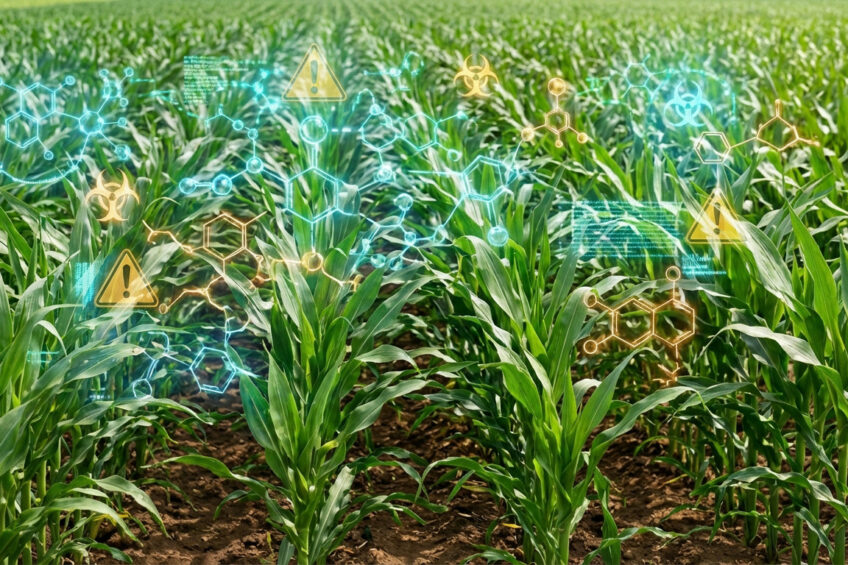
Persistently high levels of mycotoxin co-contamination, significant regional difference and commodity-specific risk profiles that present ongoing challenges for feed manufacturers and livestock producers. Those themes were highlighted in a recent global report about mycotoxin presence.
The data were shared in the DSM‑Firmenich World Mycotoxin Survey, covering January to December 2025. Across regions, the study found that multiple mycotoxins per sample remain the norm, with many areas showing extreme risk levels.
- In Central America, for example, total risk reached 83%, with high prevalence of zearalenone (94%), fumonisins (83%) and B‑Trichothecenes (76%).
- Similarly, China and Taiwan recorded 95% total risk, driven by fumonisins (88%), B‑Trichothecenes (93%) and zearalenone (81%).
- Eastern Europe, by contrast, presented a notably lower overall risk at 41%, though individual toxins such as zearalenone (54%) and B‑Trichothecenes (66%) remain prevalent.
The data reinforces a key trend that Fusarium toxins continue to dominate globally. Regions such as East Asia (fumonisins 97%, B‑Trichothecenes 89%) and Sub‑Saharan Africa (fumonisins 100%, zearalenone 59%) highlight systemic challenges in controlling storage and field‑related contamination.
Commodity-specific risks in 2025
Corn and corn silage
Corn remains one of the highest‑risk commodities. In Northern America, 88% of corn samples contained fumonisins, with maximum concentrations exceeding 77,000 ppb. Deoxynivalenol and zearalenone were also prevalent, with over 63% of corn samples containing zearalenone. In Asia, corn contamination was even more severe: 81% aflatoxins, 92% fumonisins, and 62% zearalenone prevalence, showing multi‑mycotoxin exposure at extreme levels.
Corn silage similarly showed high deoxynivalenol and zearalenone risk, with some regions reporting deoxynivalenol averages above 1,600 ppb. In several geographies, more than 90% of corn silage samples were positive for B‑Trichothecenes.
Wheat
Wheat generally presented lower aflatoxin and fumonisin levels, but deoxynivalenol and zearalenone remained significant. For example, in North America, 93% of wheat samples contained deoxynivalenol. Maximum deoxynivalenol concentrations reached 6,863 ppb in some cases, highlighting a continued threat.
Soybean meal
Soybean meal showed moderate levels of trichothecenes (32-37%) and high prevalence of zearalenone in some regions (up to 82% in North America). However, fumonisin contamination was relatively lower compared with corn-based products.
Finished feed: Strong evidence of carry‑through contamination
Finished feed results demonstrate clear carry‑through from raw ingredients. In North America, 99% of finished feed samples contained fumonisins, and 93% contained zearalenone. Global finished feed contamination reached:
- Fumonisins: up to 85% prevalence
- Zearalenone: up to 79% prevalence
- B‑Trichothecenes: often >70% prevalence
Advanced detection confirms depth of the threat
Using the Spectrum 380 analytical method, the survey reports that 98% of samples contained Fusarium‑related metabolites, with an average of 38 different mycotoxins and metabolites per sample. This shows contamination far beyond regulated mycotoxins such as deoxynivalenol, zearalenone, aflatoxin and fumonisins.
The 2025 dataset highlights a persistent and evolving global mycotoxin challenge. High contamination in corn and corn silage, widespread Fusarium toxin pressure, and strong evidence of multi‑mycotoxin carry‑over underscore the need for continuous monitoring, region‑specific risk management, and integrated mitigation strategies.
Results spark concerns
Commenting on the results, Prof Chris Elliott, attached to Thammasat University, Thailand and Queen’s University Belfast, Northern Ireland, UK, said the threat posed by mycotoxins had to be taken more seriously: “If we are serious about protecting food security in an increasingly unstable world mycotoxins must move from the margins of food safety discussions to the centre of strategic policy thinking.”
Prof Elliott said mycotoxins were a silent but escalating threat to global food security and had been intensified by climate change and were still poorly addressed by current regulatory frameworks. He noted that single-toxin thinking was no longer fit for purpose, adding that mycotoxin contamination in the food supply was far more than a compliance issue, affecting health, trade and food system reliance.