Finisher feed biosecurity: managing a high-stakes risk

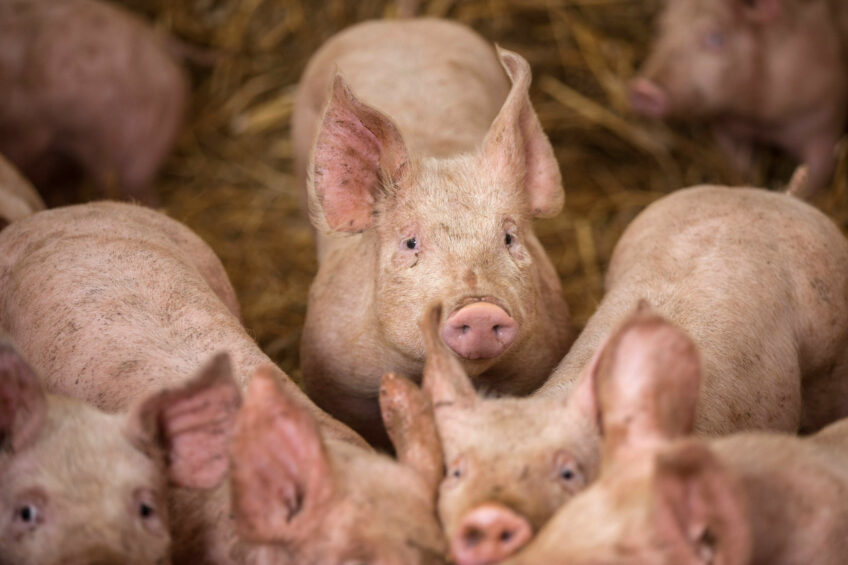
Persistence studies show that several enveloped and non-enveloped viruses remain viable in specific feed matrices for extended periods under commercially relevant conditions. For finishers, this represents a significant biosecurity gap.
When a pig reaches finishing, the stakes are at their highest: most of the money is already in the barn, feed dominates the budget, and even small health slips show up fast in growth rate, feed conversion and mortality. Over the last decade, work on PRRSv, PEDv, ASFv and other pathogens has shown that feed and ingredients can act as vehicles for introduction and recirculation of these pathogens.
Why finisher units are structurally vulnerable
A large share of lifetime feed intake occurs in finishing, so the more tonnes handled, the greater the chance of a contamination or recontamination event. Soya products, grain by-products and fats may be sourced internationally, blended and stored at multiple points before reaching the mill, each interface a potential exposure to contaminated dust, pests, water or equipment.
Thermal processing reduces microbial load, but is a point-in-time intervention. Where conditioning temperature, moisture and residence time are not tightly controlled, lethality is variable, and there is no further protection against feed recontamination downstream. Frequent pig movements, service visits and feed deliveries further increase indirect contact opportunities between farms. Even in well-managed systems, these factors make feed-mediated exposure more likely than many producers assume.
Mapping the feed pathway and critical control points
A practical approach is to treat the feed chain as a hazard analysis and define critical control points (CCPs) from ingredient origin to feeder.
- Ingredient sourcing and inbound logistics. Some matrices, notably specific soya products and micro-ingredients, support longer viral survival and are higher risk when sourced from regions with active foreign animal disease. Bulk handling during shipping and storage increases the chance of contamination from organic dust, wild birds and rodents.
- Reception, storage and processing in the mill. Shared intake pits, conveying lines and silos facilitate cross-contamination between streams and batches. Variability in grind size, moisture and conditioner residence time impacts heat transfer and microbial reduction. Dust accumulation in the mill can harbour viral and bacterial agents and be reintroduced into the product flow via air movement and spillage.
- Cooling, transfer and load-out. Cooling is a recognised recontamination window: ambient air, condensate and dust can all reintroduce pathogens to previously treated feed. Cooler and conveyor design and hygiene strongly influence this risk.
- Transport and on-farm storage. Vehicles that service multiple sites or species without effective cleaning and disinfection can act as vectors between farms. Residual feed in bins, augers and feeders can inoculate subsequent loads, even if those loads are manufactured under better conditions. Once contaminated feed reaches the feeder, exposure is driven by pathogen concentration, infectious dose and duration of exposure at group level.
Physical treatment versus sustained feed hygiene
Pelleting and other physical processes are valuable, but their limits must be recognised. Lethality is highly process-dependent; small deviations in conditioner temperature, mash moisture or retention time can materially change log reductions. Physical processes also provide no residual control of recontamination in coolers, conveyors, trucks or farm bins. Studies of Salmonella and viral contamination have repeatedly documented recontamination downstream of the pellet press and widespread environmental contamination once these pathogens enter the mill.
As a result, many systems now view chemical feed hygiene interventions as an essential complement to heat treatment, particularly in higher-risk flows. Aldehyde-based liquid feed sanitisers and medium-chain fatty acid blends have reduced viral load in contaminated feed and, in several studies, prevented infection in pigs consuming treated feed. Acidified products have inactivated ASFv in selected feed components. Reviews conclude that chemical feed hygiene agents add risk reduction beyond thermal processing and storage alone.
A finisher-focused feed biosecurity plan
An evidence-based programme for finishers typically integrates 3 elements.
- Risk-based ingredient management. Ingredients are stratified as high, medium or low risk based on origin, processing, surveillance data and matrix characteristics. For higher-risk materials, holding times can be applied where feasible, aligned with known survival kinetics for priority pathogens under local temperature and humidity.
- Mill-level control and verification. CCPs for reception, grinding, conditioning, pelleting, cooling and load-out should be defined and documented. Sequencing, flushing and dust-control protocols must be implemented and verified through environmental and product sampling. Vehicle and driver procedures should be integrated into the same framework, with clear expectations around route planning, washing, disinfection and site access.
- Residual protection of finished feed. Where risk justifies it, feed pathogen control solutions with demonstrated efficacy at realistic inclusion rates and under commercial conditions can be incorporated. Priority goes to flows supplying finisher sites in high pig density regions, sites with frequent animal movements, or farms with a history of late-finisher health instability. Response is tracked using health indicators (clinical events, diagnostics) and performance metrics (average daily gain, feed conversion ratio, mortality, carcass condemnations).
Outcomes at system level
Treating feed as a true biosecurity vector in finisher flows delivers tangible system-level benefits, including:
- Reduced frequency and severity of feed-associated disease events.
- Lower background enteric and respiratory challenge, with more stable performance and reduced antimicrobial use.
- More predictable close-out data, improving forecasting and contract fulfilment.
Given the economic weight of the finisher phase, even modest reductions in disease incidence or variation in performance can generate a favourable return on investment for well-designed feed hygiene programmes. Feed is not only a vehicle for nutrients but also a potential vehicle for pathogens. For finishers, where volume, animal density and economic exposure converge, integrating feed-mediated risk into herd health planning is central to protecting biological and financial performance.
References are available on request.
To learn more about effective options for feed pathogen control visit www.anitox.com.
Join 18,000+ subscribers
Subscribe to our newsletter to stay updated about all the need-to-know content in the pigsector, three times a week.