Feed sanitisation: A strategic approach to poultry performance

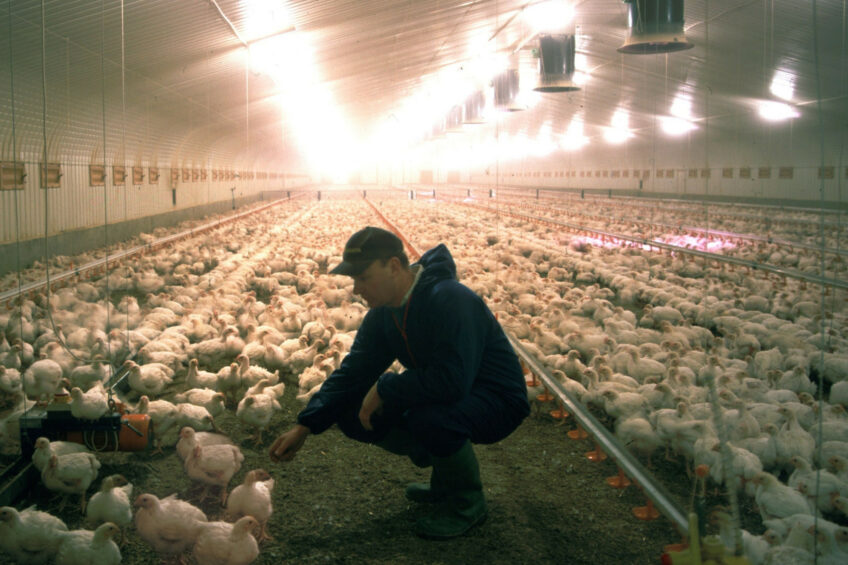
Ongoing research demonstrates that effectively controlling feed microbial loads delivers measurable improvements across multiple production parameters in broiler breeders, broilers and layer operations.
Feed quality represents one of the most critical factors influencing poultry health, performance, and economic returns. While nutrition formulation receives significant attention, the microbial quality of feed often remains an underappreciated aspect of production management.
Feed sanitisers – products that provide continued protection against feed-derived pathogens for at least 14 days post-application – have been proven as a leading strategy for reducing feed microbial loads.

Feed as a vector for pathogen transmission
Feed microbial quality varies significantly based on processing methods, storage conditions, and raw materials, creating challenges for consistent performance outcomes.
Dr Alastair Thomas, global head of poultry, nutrition, and health, explains: “Our analysis of more than 2,000 feed samples revealed Clostridium perfringens incidence varies dramatically between feed types, with pelleted feeds showing 3.65% incidence compared to 55% in non-pelleted feeds. While pelleted feeds show lower incidence, the heat generated during pelleting is insufficient to eliminate Clostridium but could trigger sporulation.”
Feeds with higher microbial loads typically exhibit higher pathogen prevalence, suggesting bacterial population changes alongside load increases. Controlling microbial loads helps improve performance and minimise risk from variable loads.
Pathogen load reduction and food safety
Recent controlled studies have evaluated the effectiveness of feed sanitisation technologies in reducing Salmonella colonisation across different production systems and challenge scenarios. These investigations provide compelling evidence for the role of feed treatment in pathogen mitigation strategies.
“Multiple controlled trials have demonstrated significant reductions in Salmonella colonisation through feed sanitisation,” notes Dr Thomas. “In broiler studies using horizontal transmission models with S. infantis, birds fed sanitised feed showed significantly lower incidence and load of Salmonella in both crop and ceca from day 14 onwards. Our experiments in layers challenged with pathogenic bacteria via contaminated feed ingredients showed that cecal prevalence dropped significantly in birds receiving sanitised feed compared to birds fed untreated control diets, whilst ovary prevalence was reduced to non-detectable levels. In one study, these pathogen reductions were accompanied by an 11.2% increase in egg production during the first 11 weeks of lay.”

Gut health enhancement and disease mitigation
Enteric health challenges present significant risks in modern poultry production. C. perfringens can proliferate abnormally during dysbiosis and cause necrotic enteritis – a frequent challenge in antibiotic-free production.
Reduced pathogen loads in feed translate to lower gut colonisation rates and decreased intestinal damage, preserving gut integrity for efficient nutrient absorption and reducing metabolic cost of immune responses.
“Under controlled necrotic enteritis challenge conditions, mortality reductions of approximately 50% when birds received sanitised feed have been observed (Figure 1). During this challenge, significant performance improvements were seen, with body weight gain (Figure 2) increasing by roughly 150 g and improved feed conversion ratios compared to the challenged control,” Dr Thomas explained.
Energy savings from reduced immune stress appear particularly significant. When birds are not constantly fighting subclinical infections, more energy becomes available for productive functions like growth and reproduction, explaining improvements in fundamental production parameters.
Breeder performance and progeny quality
Benefits extend to breeding operations, affecting both parent stock and offspring. Research from the University of Georgia shows broiler breeders fed sanitised feed from 25-65 weeks displayed reduced mortality overall, with hen mortality during late lay reduced by nearly 50%.
“We saw breeder mortality reductions of approximately 4.5 percentage points when hens receive sanitised feed. Equally important is the improvement in progeny quality, with Grade A chick percentages increasing from approximately 90% to over 92% when parent stock consumed sanitised diets (Figure 2),” Dr Thomas noted.

Integration with sustainable production
Environmental benefits extend beyond antibiotic reduction. Healthier birds with better feed conversion efficiency produce less waste per unit of product, contributing to overall production sustainability.
This approach represents a change in thinking from reactive disease treatment to proactive health management. By controlling microbial loads at the feed level, producers create a foundation for optimal performance that supports both bird welfare and economic sustainability.
“It is exciting to see how the technology we have historically relied on for feed pathogen control and food safety also positively impacts poultry health and performance,” said Dr Thomas. “These benefits translate directly into real revenue for producers making clean feed a cost-effective food safety and poultry performance strategy.”
The consistent improvements documented across broiler breeders, broilers, and layers demonstrate that feed sanitisation should be viewed as an integral component of modern poultry production systems.
To learn more about how feed sanitation can support your operational performance and productivity goals, visit www.anitox.com.