New attempt to circumvent Prop 12: The controversy continues
While it’s been almost 3 years since the US Supreme Court upheld Proposition 12, there are continued attempts to get the California legislation nullified.
US House of Representatives ag committee chairman Glenn Thompson has done so in the latest version of the Farm Bill, a piece of legislation passed every few years to set policy direction and allocate federal agriculture funding. The bill, set to be officially released on 23 February, has a section that seeks to block US states from imposing standards on livestock products produced outside that state.
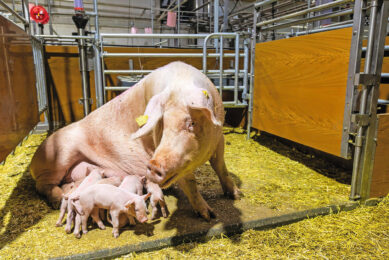
That is exactly what Prop 12 does. It was passed in California in 2018 and mandates more barn housing room for sows and piglets, in order to sell resulting meat into the Californian market.
US pork companies like Tyson Foods and even duBreton in Canada have complied with conditions of Prop 12. These changes have been expensive for producers, and there are estimates that it has caused the price of pork in California to increase by 20%.
Groups such as the National Pork Producers Council (NPPC) have fought hard against Prop 12, leading to the Supreme Court ruling.
NPPC: Praise for the new Farm Bill
Thompson described the new Farm Bill as providing “modern policies for modern challenges, shaped by years of listening to the needs of farmers, ranchers and rural Americans”.
NPPC praised the new bill. The council’s vice president Pat Hord retrofitted his barns to be Prop 12-compliant, but in previous congressional testimony, he explained that this compliance does not future-proof him and other pig farmers from further financial burdens. “Whatever I do today could need to be changed when a new state decides they want a different housing standard,” Hord stated in his testimony. “These are expensive changes, and some farmers may exit the business amid this uncertainty.”
Animal welfare group reactions
Animal welfare groups, on the other hand, reject the new version of the Farm Bill. Kitty Block, president and CEO of Humane World for Animals, stated that “the stakes here involve the welfare of animals, the integrity of our food system, the investments farmers have made in their transition to cage and crate-free systems, and the public’s trust that government won’t undo the will of millions of American voters every time a powerful industry voices objection.”
She added: “Across the country, producers, retailers and food service companies have adapted to more humane standards because they’re better for animals and people, consumers demand them, and they create stable markets and future-focused opportunities for farmers. It’s folly for a few on the House Agriculture Committee to champion a measure that punishes farmers who have rejected the cruelties of intensive confinement systems while rewarding the NPPC and other interests for their efforts to perpetuate and profit from those same cruelties.”
Join 18,000+ subscribers
Subscribe to our newsletter to stay updated about all the need-to-know content in the pigsector, three times a week.