UK advice: prohibit CO2 for stunning of pigs
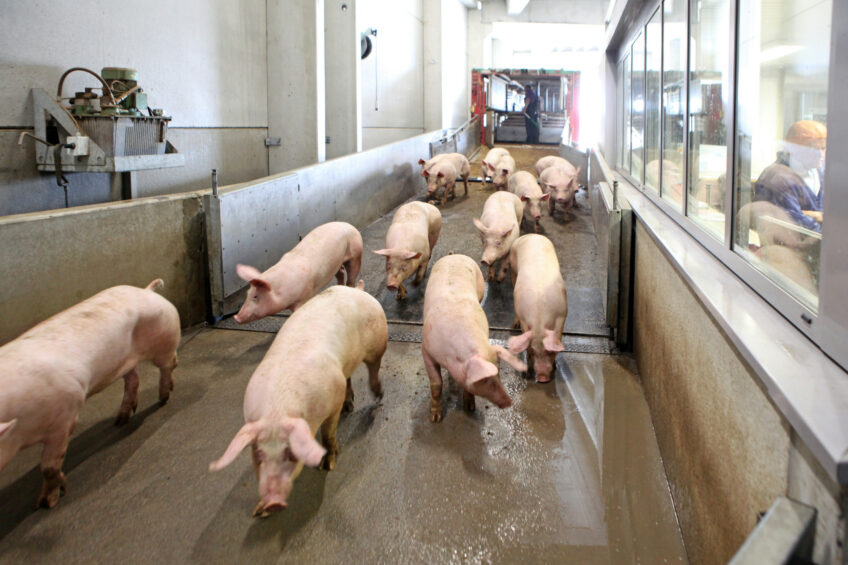
The use of CO2 should be prohibited as a method of stunning for pigs. That is intended to prevent them experiencing avoidable pain, distress or suffering at slaughter associated with high concentration CO2 in combination with inert gases.
That, in short, is the opinion of the British Animal Welfare Committee (AWC) after a comprehensive review of evidence regarding the welfare impacts on pigs of high concentration CO2 stunning. The committee also looked into welfare impacts on pigs of potential alternative stunning methods such as inert gases, manual electrical or automated electrical. The AWC consisted of independent experts of the Department for Environment, Food and Rural Affairs (Defra), the Scottish government and the Welsh government.
The committee added to its conclusion that any transition period given to industry to enable the change to alternative methods of slaughter should be as short as possible and in any case within 5 years. Industry should seek to implement the changes as quickly as possible.
Controlled Atmosphere Systems
The committee looked into so-called “Controlled Atmosphere Systems” (CAS) – a system used in 90% of stunning cases in England and Wales. The system is designed for 5 to 7 pigs to be restrained within a cage or “gondola,” after which a high concentration of CO2 is introduced quickly. The construction of the system consists of a pit which contain 3 to 6 gondolas on a motorised loop system which lowers them into and out of the pit. CO2 is continually pumped into the base of the pit to maintain the necessary gas concentration throughout, the AWC explained.
Exposure of conscious pigs to high concentrations of CO2 is associated with 3 major welfare concerns, the AWC said, being:
- Pain, leading to vocalisations;
- Respiratory distress, leading to hyperventilation; and
- Fear, leading to escape attempts.
These are observed before loss of posture and hence occur in the conscious phase of the stunning process.