Review: Sustainable protein is a job for the livestock industry
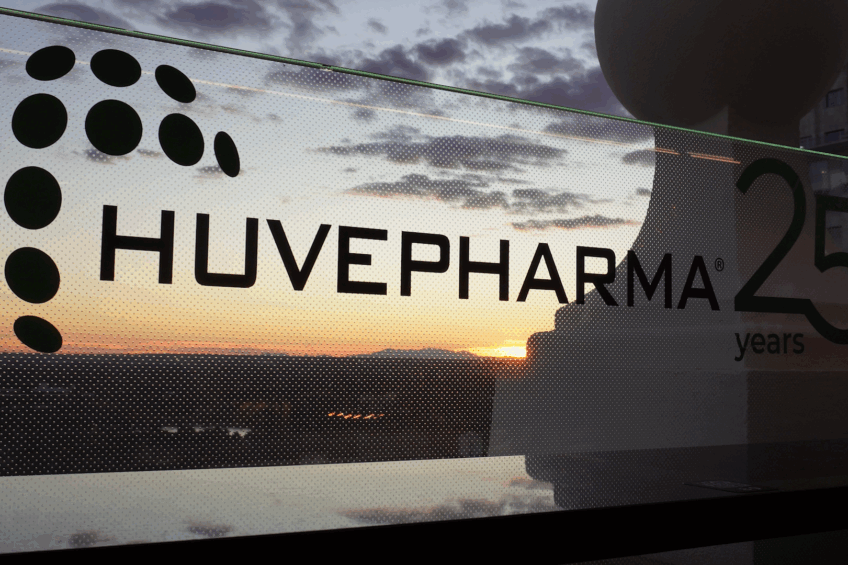
For a few years it appeared that the livestock industry was going to face serious competition of alternative protein products. Some of those developments, however, appear to have been hypes. That much became clear at a recent congress in Madrid, Spain, to celebrate 25 years of Huvepharma. So, for true steps in making protein production more sustainable, it’s all eyes on the livestock industry.
Forget about culture-based meat, and better not think about plant-based meat either. Those messages were shared loud and clear in Madrid, Spain, when animal health and nutrition company Huvepharma celebrated its 25th anniversary, from 23-25 September, 2025. Over 400 industry experts from 61 countries worldwide gathered in Spain’s capital to discuss the future of sustainable livestock production – the theme of Huvepharma’s event had organised.

No more investments in lab grown meat
Culture-based meat is past its prime, said Prof Paul Wood of Monash University in Australia. In a neutral analysis the renowned expert said that in 2025, contrary to previous years, investment dollars are no longer being spent into lab grown meat. Initiatives came and went, he said. Start-ups tried and most disappeared again. The most commonly heard reason: it is simply not possible to scale up production to such a degree that the masses can afford it. Eventually the companies that persevere in marketing lab-grown meat end up serving the niche that is willing to pay substantial amounts of money for a spoonful of lab-grown meat.
New products are hydrophobic. What you can do is put sauces on top and hope

The ‘beyond’ bubble
Similarly, in a different presentation, the ‘beyond’ bubble also seemed to be seeing the end of its hype. Arlin Wasserman, founder and managing director of consultancy firm Changing Tastes in Philadelphia, PA, United States, said that perhaps plant-based burgers may be edible and available, but as a replacer of meat they do not impress much. “Plant-based does not live up to the promise. Meat soaks up marinades or spices. But the new products are hydrophobic. What you can do is put sauces on top and hope. I can make a hamburger taste 40 different ways. But an impossible burger you can make only one way.”
Wasserman spoke of a declining sales volume for plant-based ‘meat.’ The company Beyond Meat appeared to have acknowledged that replacing meat is perhaps not the best strategy. Wasserman pointed to the company’s recent decision to simply be called ‘Beyond’.
So what started a few years back as promising – perhaps daunting – initiatives to flood the market with alternative meat-like protein sources, may eventually face existential drawbacks. If both developments are facing severe headwinds, it is the animal protein industry that has to step up to be in the lead in the sustainability challenge. The question is how and how to reach consumers with that message?

5 opportunities
Various interesting speakers highlighted the opportunities for the livestock industry to take those further steps into the future. Justin Sherrard, for instance, former animal protein analyst at Rabobank and now an independent consultant based in Sydney, NSW, Australia shared identified 5 different areas of opportunity, which the livestock industry could focus on to be prepared for what is to come.
- Harnessing trade opportunities;
- Maintaining consumer engagement with animal protein;
- Investing in new product development;
- Building new data driven supply chain models; and
- Improving the way the industry communicates about animal protein.


Communication
Quite a few speakers touched on that last point: communication. On behalf of Finne Advisory, Ann-Nina Finne gave an analysis how in her view historical events (’signals’) turn to journalistic narratives (’stories’), upon which political policies would be based (’shifts’). She suggested that players in the livestock industry ought to get out there and get their own story out. That way the agricultural perspective on sustainability can be out there before others do so.
A good example in that perspective are the attempts that have been done by animal health and nutrition company Alltech, a business partner of Huvepharma. The company presented its recent documentary World Without Cows to the audience, to inspire the delegates with how storytelling can help bring the agricultural side of sustainability to the world.
Sustainability in practice
Going more to the practical side of things, Dr Thordis Möller spoke on behalf of global meat supplier OSI. Dr Möller is the company’s sustainability director for continental Europe, and explained what sustainability comes down to in her company. She highlighted areas her company is focusing on to make sure OSI and its partners in the production chain are compliant with EU sustainability legislation.
Interestingly, the title of her presentation was ‘Is sustainability still relevant?’ It was a rhetoric question as of course it is, she said, calling it even ‘inevitable’ in her conclusion. Working more sustainably is something that simply has to happen as otherwise nobody can continue to be in operation.
Acting sustainably
Not surprisingly, also for organiser Huvepharma, sustainability “remains core focus,” explained vice president Eddy Piron in his introduction. Obviously, the company’s product line can help the livestock industry work more sustainably, but also in its own operations it aims to be fully carbon neutral, by e.g. the use of solar panels as well as the re-use of waste.
Piron did also mention what he called the “elephant in the room” – the company’s antibiotics portfolio. In a time where antibiotic reduction is also considered a key component of a sustainable world, Huvepharma continues to manufacture and sell them, for treating sick animals. “There will always be a need for antibiotics, there will be a demand for it. We always say: as little as possible, as much as needed.”
He emphasised that these antibiotics are not the same as for human use, and, surprisingly, admitted that the company is supporting clients to use fewer antibiotics. That sounds paradoxically, but it is not, he said. His message is: “If there is a need, then come to us.”
In videos at www.pigprogress.net both Justin Sherrard as well as Dr Thordis Möller will soon further explain their lines of thought.
Join 18,000+ subscribers
Subscribe to our newsletter to stay updated about all the need-to-know content in the pigsector, three times a week.