Straw, space and Switzerland in Pig Progress 6
The latest edition of Pig Progress is now available online and includes the annual InterPIG benchmark data showing changes in global swine production, insights on tackling tail biting from expert Dr Francesc Molist, and a look at a profitable Swiss farm with spacious, welfare-friendly systems. This and much more.
Changing places in the productivity league table
Every year, InterPIG releases benchmark data about a range of leading swine countries across the globe. This year’s outcome? Spanish producers have fallen down the league table, farmers in Brazil and in France seem to be advancing steadily, and the Dutch and the Danish are contending who’s the most efficient producer in Europe. Read more on pages 6-8.
Column: Tail biting, feed and stocking density
Tail biting is a nagging problem in swine production. Increasingly, especially in the EU, tail docking is no longer considered to be the way ahead, which forces the industry to ask why tail biting occurs. Housing, feeding systems as well as diet formulation all have a role to play, explains nutrition expert Dr Francesc Molist of Schothorst Feed Research in the Netherlands. Page 9.
BI and SoundTalks go their separate ways
Animal health company Boehringer Ingelheim and precision livestock farming company SoundTalks will end their distribution cooperation by late October 2025. The SoundTalks products as well as services will continue to be available as normal. More details on pages 10-11.
Free farrowing and crushing: what actually happens?
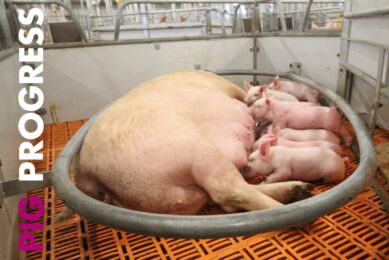
With free farrowing systems expected to be introduced soon in the EU, it is time to develop new housing solutions. But wait! Will piglet crushing increase? A research team in Italy used the latest technology and gave 3 take-home messages as explored on pages 14-15.
Calcium and phosphorus needs of gilts and sows
Few areas of animal production have matched the productivity gains observed in sows over the last 3 decades. However, this increase in productivity has come at a cost, as sow mortality has steadily increased. Does the current knowledge about exact mineral supplementation to gilts and sows need an upgrade? Read more on pages 16-17.
For pig production, anything is possible in Switzerland
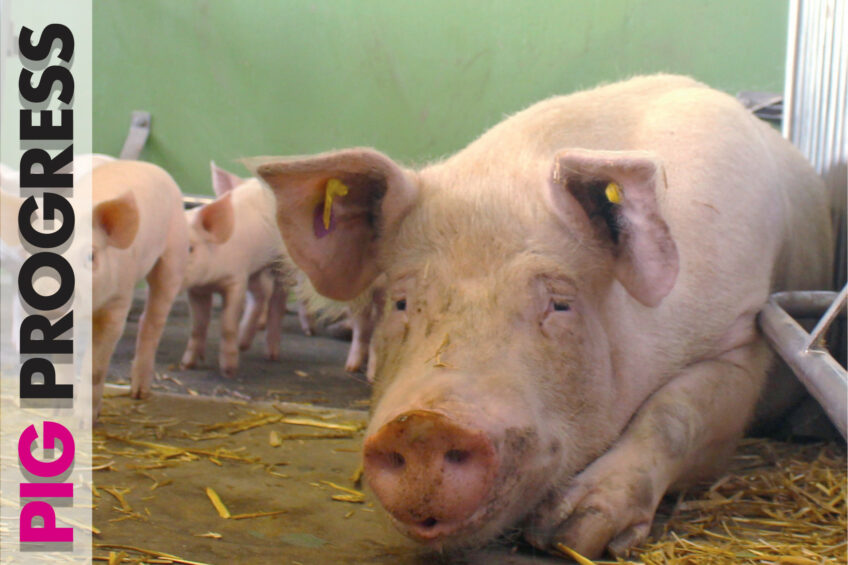
Imagine a farm with 160 sows, large amounts of space per farrowing pen, 3.5 employees, long tails, weaning at 32 days, straw everywhere and access to outdoors for most pigs – and making good money. Does that sound futuristic? Not in Switzerland – there, everything is possible. Visit this farm on pages 18-23.

Review: Pig health symposium revolving around welfare
The 2025 edition of the European Symposium for Porcine Health Management (ESPHM) was recently held in Bern, Switzerland. The symposium’s keynote presentations focused on the ‘5 freedoms of animal welfare’, celebrating the 50th anniversary of the concept. This refreshing approach moved away from strictly technical veterinary content to connect veterinarians with broader ideas and perspectives on animal welfare. This review can be found on pages 24-27.
WPX 2025: Much more than a pig trade show
From 4-5 June, Des Moines, Iowa in the US was the centre of the pig world as crowds gathered to attend the 2025 edition of the World Pork Expo (WPX). This year’s edition was the best since Covid-19, according to many who attended the event, which is reviewed on pages 28-29.
DPP 2025: Pig feed strategies for a sustainable future
The 16th edition of the Digestive Physiology of Pigs (DPP) conference drew more than 500 attendees to Lake Geneva in Wisconsin in the US from 20-23 May. The event brought together researchers, innovators and industry professionals from across the globe and offered a comprehensive exploration of swine digestive biology, nutrient interaction and gut health. The insights presented were more than academic – they were strategic. Take a look on pages 30-31.
Column: Quantity or quality?
Stocking density for finisher pigs isn’t as straightforward as it may seem. External factors can cause the optimal stocking density to vary between farms, and this may also change over time, writes welfare and health expert Dr Monique Pairis-Garcia on page 34.