Sows, shade and Spain in Pig Progress 7
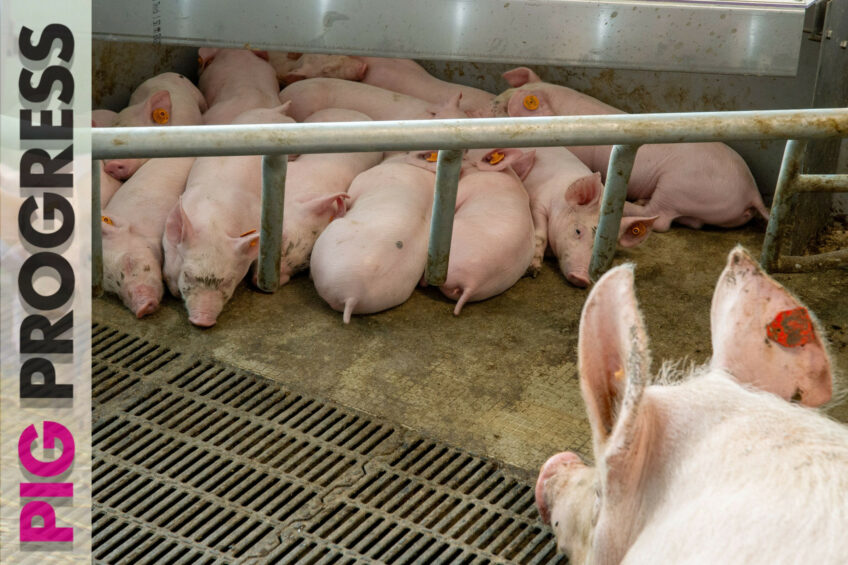
The latest edition of Pig Progress is now available online and includes a look at how (and if) insect products can help improve animal health and immunity of pigs and an interview on gene-editing transparency with PIC’s COO Dr Matt Culbertson. This edition also covers feed additive strategies, supply chain resilience, and animal welfare initiatives, as well as a farm visit in Belgium. This and much more.
Insect products as health promoter
Microbial infections and heat stress can negatively impact animal health and welfare. Veterinary antimicrobials are commonly used to treat these infections, but their use can lead to antimicrobial resistance. So alternative solutions are needed to improve animal health and immunity with insect products showing promising results. Pages 6-7.
Interview: Supporting transparency and choice about gene-editing
On paper it sounds great: no more pigs being susceptible for PRRS. No more diseased pigs, no more suffering and considerable efficiency gains. Made possible by novel technology by breeding company PIC. Yet, not everybody is a big supporter of gene-editing technology. Critics say meat consumers or countries are entitled to know whether gene editing has been used to produce meat. PIC’s COO Dr Matt Culbertson responds. Pages 8-10.
Column: Win-win nutrition
Is it always better to add one more feed additive for a bit of extra revenue? Not always, says nutrition and health expert Dr Casey Bradley. The best approach is to consider the “cost of gain”. If the extra additive does not ultimately pay off for pork producers, then a more disciplined strategy is advisable. Page 11.
Interview: The value of supply chain resilience
What makes supply chain resilience so important? Is resilience alone enough, and how is it becoming increasingly significant in creating future-ready systems? Corinne Bonadei, head of Precision Services, and Silvia Sonneveld, head of the Vitamins Unit at dsm-firmenich Animal Nutrition & Health, discuss this in this interview. Pages 12-13.
The bigger picture: Made in the shade
It is a bit of an unusual sight, pigs under a parasol. Yet, the 100 pasture-raised hogs at Tabula Rasa farm in Oregon, USA, have the luxury of having a huge canopy at their disposal. Take a look at the bigger picture on pages 14-15.

Farm visit: Sows as the latest addition to a family farm
Pig producer Nicolas de Wilde is located in the French-speaking part of Belgium – traditionally not a place of pig production. For him, recently, a new chapter began, as he started producing his own piglets. He is producing for the local market through his cooperative, using feed from his own land. Pages 16-19.
‘Historic’ roadmap towards animal-friendly production
In the Netherlands, 11 key stakeholders – including farmers’ groups, processors, retailers, social organisations, and authorities – have united to sign a roadmap for improving animal welfare in livestock production. The ambitious plan requires billions in investments, showing strong sector-wide commitment to more humane and sustainable farming. Pages 20-21.
What was driving Spain’s pig performance in 2024?
Recently, new insights were presented related to financial and performance results of 200 of Spain’s largest farms, covering a total of 1.6 million sows. The latest figures show that total production costs have been decreasing; however health issues have caused weaner mortality to grow since 2022. Pages 22-23.

Column: Tail biting, feed and stocking density
Housing, feeding systems as well as diet formulation all have a role to play in tail biting, explains nutrition expert Dr Francesc Molist of Schothorst Feed Research in the Netherlands. This article is a re-publication of the column in the previous edition, with some data being corrected. Page 25.
Column: Thermal discomfort
Pigs are remarkably adaptable and very versatile, writes welfare and production expert Dr Irene Camerlink. That is a characteristic the swine industry would have to embrace more – and not spoil them too much. This column reflects her presentation at the recent edition of ESPHM, held in Bern, Switzerland, in May 2025. Page 26.