Australia, ASF and attention in Pig Progress 1
The latest edition of Pig Progress is now available online. The pages of this edition consider how Spain was affected by ASF, looks at a free-farrowing system that can be retrofitted into existing lactation facilities, and highlights a new biosecurity tool built specifically for the Brazilian market. This and much more.
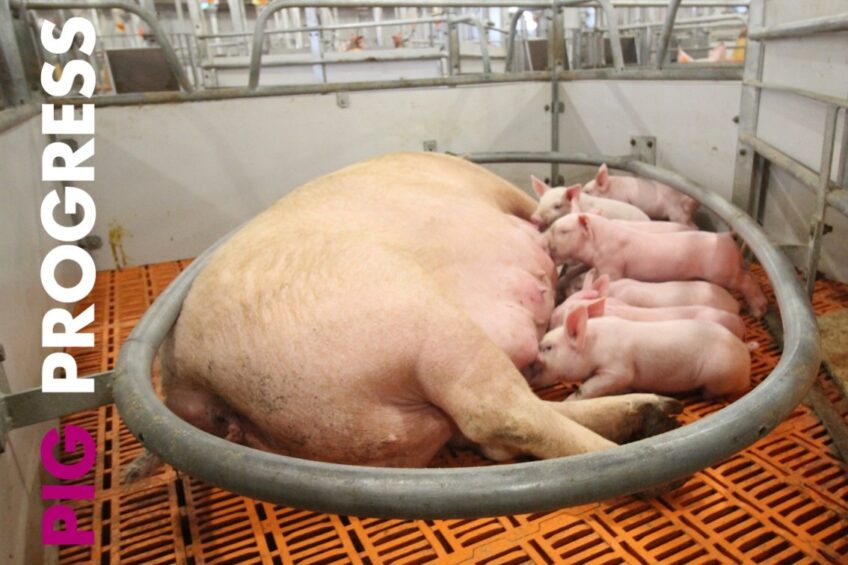
Maternity rings: free farrowing, no space issue
A free-farrowing system that can be retrofitted into existing lactation facilities is at the core of the maternity rings, a challenging and bold road recently taken by the Australian integrator SunPork. Roseworthy Farm near Adelaide, South Australia, was one of the first to get maternity rings on-site – and that was only the beginning. Pages 6-12.
Spain feels consequences of ASF as various markets close
Late November 2025, Europe’s largest pig-producing country experienced what it means to have African Swine Fever (ASF) return within its borders. Up to late January, the virus only circulated amongst wild boar. Nevertheless, the effects of the virus are clearly noticeable. Pages 14-15.

Soon to come: Brazil-specific biosecurity software
Brazil’s agricultural research institute Embrapa set out to develop a biosecurity compliance analysis tool that is specifically built for the situation in Brazil. It will be made available to the country’s swine producers in the coming months. Pages 16-17.
Unmasking PRRS infections: Lessons from Danish modelling
Denmark is well on the way to free the country from PRRS virus. This is obviously easier said than done. Several lessons can be drawn from Denmark’s approach, but one thing is clear: measuring data and transparency are key. Pages 18-20.
Column: ASF and pork production profitability
The arrival of ASF in Spain has negatively affected the profitability of pig farmers across the EU, mainly driven by a reduction of pork prices per kg. Several management and nutritional strategies can be implemented, writes nutrition expert Dr Francesc Molist. Page 21.
The bigger picture: The brand new fermentation plant by Huvepharma
Covered in protective clothing, another busload of intrigued visitors makes their way to the brand new fermentation plant by Huvepharma in Bulgaria. Pages 22-23.
Farm visit: Weaners having a field day with forage
Pig producer Ronnie Berendsen, working at farm sites in the Netherlands and Germany, has found that using the so-called ‘Pulsfeeder’ has reduced the tendency of piglets to embark on tail biting activities. He tested the device and contributed to its design. Pages 24-27.

Gauging the carbon footprint of feeding pigs in the USA
A new ambitious research initiative ought to give a boost to estimating the accuracy of the carbon footprints of raw feed ingredients in the United States. This would allow making more precise life-cycle assessments (LCAs). Pages 28-29.
Interview with Dr Aldo Rossi, Amlan International – A holistic approach to gut health in livestock
A healthy gut is the foundation of animal health and performance, highlights Dr Aldo Rossi, director of technical services at Amlan International. Here, he discusses the road to a healthy gut in livestock with a holistic approach – from improving feed safety and combatting pathogens to tackling mycotoxin contamination the right way. Pages 30-31.
Farm visit: Growing pigs as well as larvae on the same farm
It’s not just pigs that are being produced at the farm of Manfred and Elisabeth Aue in southern Germany. The farm also produces 1,000 tonnes of insect larvae per year. Positive experiences with larvae feeding were the deciding factor for this new challenge. Pages 32-36.

Interview with Richard Maatman, CEO of Hendrix Genetics – “Our impact carries great responsibility”
Hendrix Genetics aims to become the number one or two in every animal species with which it is active. The recent acquisition of Danish Genetics underscores that ambition. Capital is available for acquisitions. Pages 37-38.
Column: Flooring, surface and stocking density
Stocking density is an often overlooked issue. Managing to squeeze in that one extra pig might lead to an optimal use of flooring space, but if that goes at the expense of tail biting, feed conversion and ultimately, growth, perhaps a second thought is worth the effort. Health and welfare expert Dr Monique Pairis-Garcia shares recent insights. Page 42.