Research: Swine influenza has not mixed with other flu types in recent years
There hasn’t been a mix between swine influenza and other influenza types (human and/or avian) in the Netherlands in recent years. The viruses did mutate though.
That is the outcome of research conducted in the Netherlands in order to monitor what is happening with swine influenza viruses in pig farms over 2024 and 2025. The research was carried out by Wageningen Bioveterinary Research (WBVR), the Erasmus Medical Centre in Rotterdam, the Royal GD Animal Health and the Netherlands National Institute for Public Health and the Environment (RIVM).
The study aimed to better understand the development of influenza viruses. Pigs, humans and birds can become infected with each other’s influenza viruses, with the risk of the viruses mixing. While the risk is low, this is one pathway for highly contagious viruses to emerge.
Samples of bodily fluids from pigs
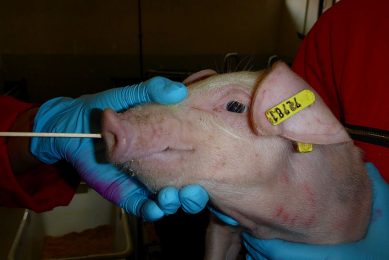
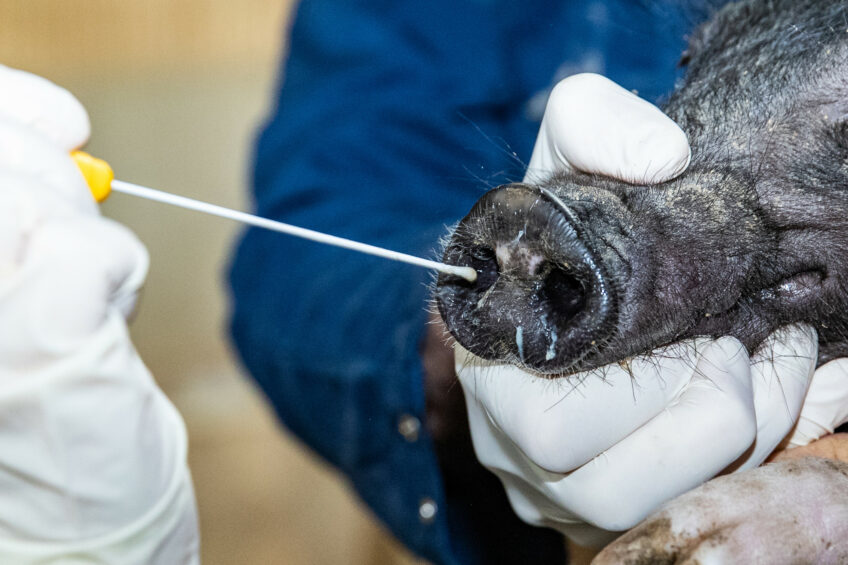
The study examined a total of 2,237 samples of bodily fluids from pigs, such as nasal mucus and saliva, between July 2023 and September 2025. Influenza viruses were found in 484 samples.
The study showed that the pig viruses have changed over time. In some cases, a similarity with human influenza viruses was also found, indicating that viruses have spread from humans to pigs. No new variants were found in which a swine influenza virus had mixed with a human or avian influenza virus.
The study also examined the effectiveness of influenza medications against different swine influenza viruses. This has been studied with 25 variants of swine flu viruses and has proven effective.
The research was commissioned by the Netherlands Ministry of Health, Welfare and Sport and is part of the strategy for tackling zoonoses (diseases that can be transmitted from animals to humans) and pandemic preparedness.