ASF Spain: “No lab match with Spanish strain”; wild boar cases rise to 142
A report released by the Spanish Ministry of Agriculture, Fisheries and Food (MAPA), has confirmed earlier research concluding that the current African Swine Fever virus outbreak has not escaped from a laboratory. The new Spanish strain might prove to be a “moderately virulent” variety, according to the report. Still the death toll keeps rising: 142 wild boar have now succumbed to ASF.
The report was released on Monday, February 9. The ministry had requested 9 experts in pig production and in wildlife to take a wide angle to the ASF cases, analyse, research and come up with recommendations. The committee indeed gave 9 recommendations as to how to tackle the crisis (see box).
LCV: “No” to escape from lab theory
One of the questions that still needed answering was how the virus managed to emerge close to Barcelona, late November 2025. While the committee’s report does not give a conclusive answer to that question, it looks like the “escape from lab” theory can be put away.
The “escape from lab” theory had Spanish media been keeping busy throughout December. Especially the lab of the research institute IIRTA-CReSA was scrutinised, as fundamental ASF research is often carried out there and it was located right in the heart of the infected area.
Just before the turn of the year, a different research institute in the Catalonia region, already reported that the virus strain in wild boar did not match any of the strains used inside the lab of IRTA-CReSA. The research suggested that the viral strain in the forests near Barcelona would have to form a new group – later called genetic group 29. At the time it was added that a final verdict would have to be given by the Spanish Central Veterinary Laboratory (LCV) in Algete, close to Madrid.
The committee’s report now does include LCV results. The committee’s conclusion on the lab theory reads, “Overall, the results obtained through complementary analytical strategies and by independent organisations showed no genetic match between the Spanish isolate and the viruses used in experimental activities at IRTA-CReSA, either at the level of partial markers or at the whole genome scale.”
81 samples analysed
In total, the LCV study included 81 samples supplied by IRTA-CReSA, representing all the relevant genotype II material available at the centre, selected by the European Union Veterinary Emergency Team (also known as EUVET). The report stated, “These samples comprised 12 viral isolates from historical strains (Georgia 2007 and Armenia 2007) and 69 clinical samples (blood) from 4 experimental infections conducted in 2025.”
The report continued, “The screening results showed that none of the analysed samples presented the specific genetic markers (SNPs) identified in the virus detected in the outbreak. In all cases, the sequences obtained corresponded strictly to the inoculated strains (Georgia 2007 or Armenia 2007), with no evidence of the acquisition of mutations compatible with the genomic signature of the virus detected in Catalonia.”
So far a full genome sequence of the ASF virus strain has not been released – but to do so is one of the 9 recommendations by the committee.
The report also discussed 3 other potential routes of infection, i.e.:
- introduction from active outbreak locations in Europe (unlikely because there’s no genetic similarity to the closest infections elsewhere in Europe);
- deliberate introduction and introduction from a large distance due to human activity (incoherent theory as the Spanish strain does not resemble any known strains); and
- introduction by accident via human activity (the report mainly points to the possibility that someone might have brought infected meat into the area).
Wild boar with ASF virus antibodies
Interestingly, the report also pointed to the fact that during surveillance, wild boar had been captured with antibodies against the virus, suggesting some animals survived infection. No further details were given about those cases, just that the committee placed this in a wider characterisation of the Spanish ASF strain.
In the summary of the report, the committee wrote: “The spatial spread shows a slow and localised pattern. The detected virus exhibits a distinct genetic signature and field behaviour different from that observed in outbreaks associated with highly virulent strains, including the presence of animals with antibodies against the virus. Taken together, these observations are consistent with the possible circulation of a moderately virulent isolate, potentially associated with subacute forms of the disease, although this hypothesis requires confirmation through experimental testing.”
Number of dead wild boar up to 142
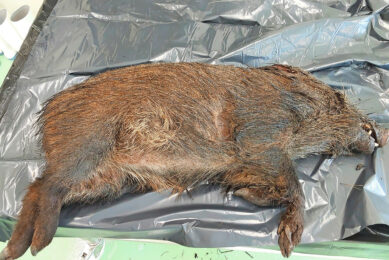
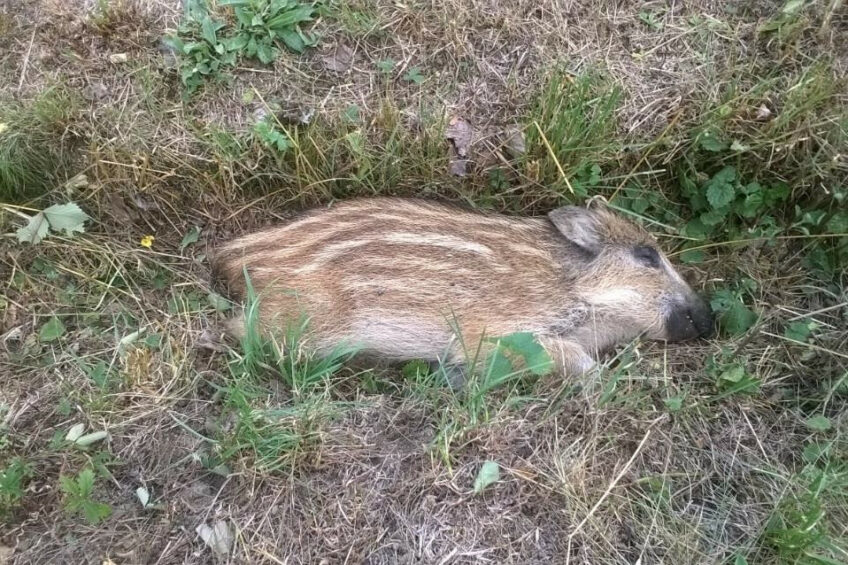
In the meantime, the number of infected carcasses in the area north of Barcelona has risen to 142. Even though the area in which the dead infected carcasses are found remains limited, carcasses are found a touch more to the north as well. The latest found, dating from February 1, points to a location at about 1 km from Sabadell Airport, a local airfield. That is about 700 m more north than the latest report. At that place, according to the World Organisation for Animal Health (WOAH), another 17 wild boar carcasses were found.
The total area in which infected carcasses have been found measures almost 7 km north to south and 5 km east to west.
Join 18,000+ subscribers
Subscribe to our newsletter to stay updated about all the need-to-know content in the pigsector, three times a week.