ASF Spain: Committee appointed to monitor outbreak
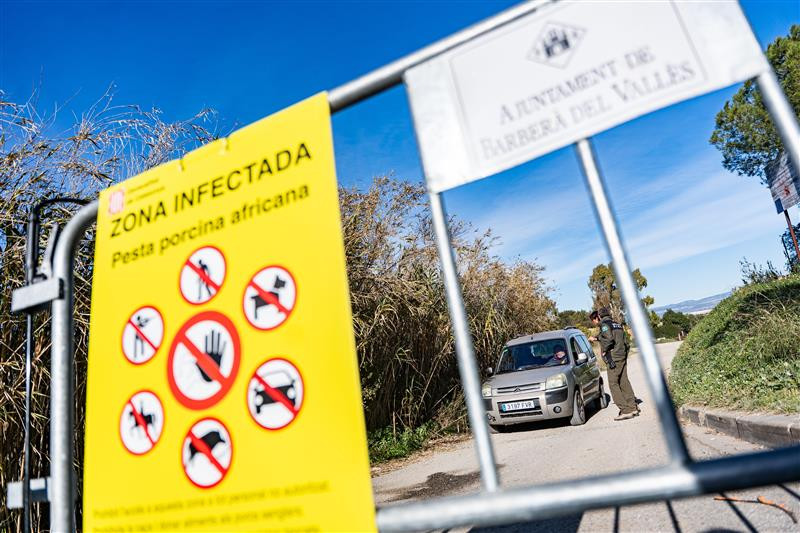
A total of 6 pig production and wildlife experts will sit on a Spanish committee to investigate the evolution and cause of the ASF outbreak near Barcelona, which has so far infected 13 wild boar and led many countries to close their borders to Spanish pork.
The permanent advisory working group will remain operational as long as the outbreak detected in the province of Barcelona continues, wrote the Spanish Ministry of Agriculture, Fisheries and Food (MAPA) in a recent news release.
Animal health, wildlife and production experts
The 6 scientists include 2 experts in animal health research, 2 in wildlife and 2 in animal production.
The animal health experts include María del Carmen Gallardo Frontaura, a researcher at the Animal Health Research Center-National Institute for Agricultural Research (INIA-CISA) in Valdeolmos, Madrid, and Marta Martínez Avilés, a veterinary epidemiologist at the Spanish National Research Council (CSIC).
Wildlife experts include Cristian Gortázar Schmidt, professor of animal health at the University of Castilla-La Mancha; and Carlos Sánchez García-Abad, research director of the Artemisan Foundation and a PhD in veterinary medicine from the University of León.
Animal production experts include Daniel Babot Gaspa, professor at the University of Lleida, and Antonio Palomo Yagüe, a veterinarian with a doctorate from the Universidad Complutense of Madrid.
How did the ASF virus enter?
In the meantime, the discussion is continuing on how the virus could enter the wild boar population in Catalonia. Genomic analysis carried out at the INIA-CISA pointed in the direction of the virus resembling the original virus as it was found in the country Georgia in 2007. With that particular variety, tests in highly biosecure labs are being carried out, which is why an “escape” from a lab is one of the possible routes of investigation.
In that context, the laboratory of the world-leading institute IRTA-CReSA is often mentioned in Spanish media, as the virus was found relatively close to where the first dead wild boar were found.
Accidents can happen versus intent
Spain’s newspaper El País, headquartered in Spain’s capital Madrid, quoted veterinarian professor emeritus Dr José Manuel Sánchez Vizcaíno, who at the time was pivotal in the eradication of ASF from Spain in the 1980s and 1990s. He said: “If it had been introduced through food brought in from outside or by animals, it would be a clearly identifiable virus. So how does this virus suddenly appear, if it’s apparently not circulating in nature? We have this variant in almost every laboratory. All epidemiological probabilities point to it being an escape. This possibility shouldn’t offend anyone. Accidents can happen.”
The newspaper also spoke to Dr Cristian Gortázar, who will be taking place in the aforementioned expert committee. He also considered sabotage, that someone might have deliberately left contaminated food in the vicinity of the CReSA research centre. He told El País, “In a biosafety level 3 facility, it’s highly unlikely that this virus would escape, because to transmit it you need a certain amount of infected tissue or virus culture. A foot and mouth disease virus is small and you can accidentally carry it in your nose. ASF virus is so bulky, and so difficult to transmit, that it’s highly unlikely to escape. That’s why I’m more inclined to think it was malicious than an accident.”
Wildlife management gathering
MAPA also shared that it convened with the heads of wildlife management from autonomous communities throughout Spain to gather information on the epidemiological surveillance and biosecurity measures they are implementing for wildlife, data on wild boar population monitoring, and the measures in place for their control. Ideally MAPA hopes to improve the availability of standardised and comparable wild boar population data across Spain.
In addition, regional officials presented the population control measures their communities are implementing to address the overpopulation of wild boar and shared experiences already put in place.
Join 18,000+ subscribers
Subscribe to our newsletter to stay updated about all the need-to-know content in the pigsector, three times a week.