Using best practices in HPAI control
Highly pathogenic avian influenza (HPAI) remains a serious and evolving threat to commercial and backyard poultry flocks worldwide, and its oversight must be updated. That’s the view of those who support the National Poultry Network (NPN), a new governance model developed in Canada that’s now gaining national momentum and attracting global interest. It’s the brainchild of Dr Jeff Wilson, president of Novometrix Research and an associate professor in the Ontario Veterinary College, University of Guelph.
Instead of the present HPAI management system, which many consider fragmented, opaque and ineffective, NPN presents a stakeholder-led, evidence-based response model and leadership structure that unites everyone in the sector. It is based on four Pillars of Outbreak Response, delivered through a combination of two proven global management frameworks, Community Network Integration and the Universal Quality Management System (CNI-UQMS). A paper on the NPN approach has been published in the Canadian Journal of Veterinary Research.
Wilson stresses that what makes this initiative different from previous outbreak governance models is that producers are not merely represented; they are empowered. “Through a distributed governance system, every producer has a voice, and every region contributes to a collective, evidence-based future,” he explains. “This is not reform from the top down, it’s transformation from the network up, designed to keep Canadian poultry profitable, innovative and resilient for decades to come.”
Furthermore, while this governance model is initially being applied to HPAI management, it can be easily adaptable across any animal, human and environmental health arena. The result in each case is the establishment of a transparent, accountable and adaptive governance system for making evidence-based decisions that supports federal leadership while clearly defining the roles of provinces/states/regions, industry members and the public.

The foundation of the framework
As Wilson explains, the Pillars define established best practices for outbreak management, emphasising leadership, data and analysis, evidence-based interventions and transparent communication. Two of the Pillars are a national leadership team with advisory support, and a robust and up-to-date HPAI information repository that includes an expert network, published studies and more. The other two Pillars are an evaluation framework for key interventions (diagnostics, quarantine, depopulation and immunologic strategies) and a multidirectional communications strategy.
Examining the frameworks, CNI offers a validated, evidence-based framework for aligning diverse stakeholders to solve complex problems collaboratively. UQMS extends quality-management principles across entire networks, ensuring coherent, transparent and accountable coordination of everything from human resources to finance to public communication.
Wilson reports that “Novometrix is collaborating with a diverse range of stakeholders, from provincial governments and academic institutions to producers and NGOs, to promote wider adoption of the Pillars under the CNI-UQMS framework. The approach has been well received across various groups, including academics and industry value chains. We are also working with national and provincial poultry boards. Many have expressed support or are reviewing our scientific recommendations for best-practice outbreak management. We aim to complement existing board structures by providing shared, evidence-based frameworks that enhance performance and build trust.”
Practical steps
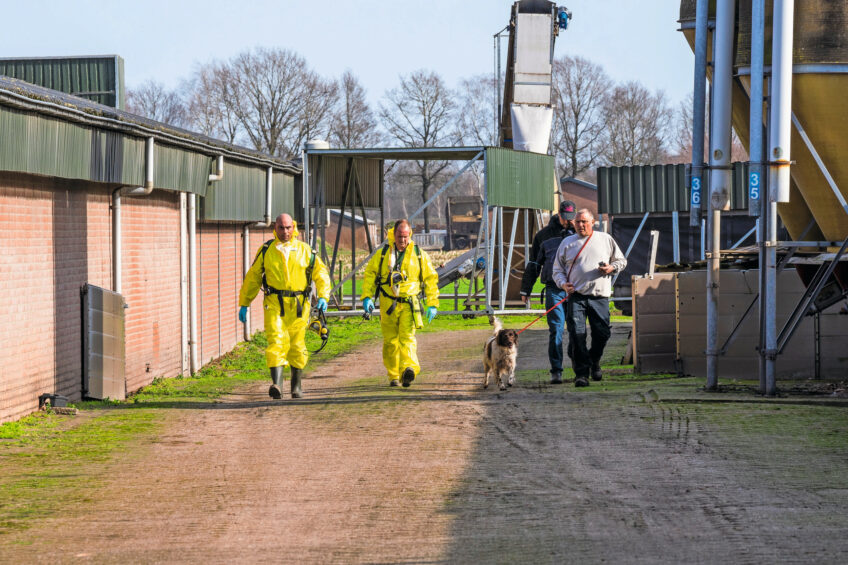
Wilson notes that the historic North American HPAI outbreak response has primarily focused on “large-scale stamping out” of disease through mass euthanising. He believes that instead, there should be exploration of three powerful categories of potential interventions that could reduce or entirely replace mass culling.
One of these is enhanced biosecurity – measures such as water disinfection, air filtration, and optimal barn density management. Another is enhanced immunity – management-based immunity (stress reduction, improved nutrition, disease control and environmental optimisation) and biological immunity (vaccination aligned with global best practices and selective breeding for disease resistance). The third and final category of intervention is ecological mitigation of HPAI, which involves managing the multidirectional transmission of the pathogen among wildlife, domestic animals, and humans.
“To succeed, these measures should be implemented in coordination with all four Pillars, supported by continuous data collection and risk evaluation,” says Wilson. Novometrix is already advancing these priorities through a binational research and implementation team, as well as water-disinfection pilot programmes that directly engage farmers. Novometrix is also optimising data management to enable real-time, evidence-based decision-making and is completing a white paper on ecological approaches to outbreak mitigation. “These are practical, scalable projects,” says Wilson, “each offering funding and partnership opportunities for industry, academia and government. They generate positive outcomes not only for HPAI but also for other key health challenges in the Canadian poultry sector.”
Innovation and economic growth
Beyond outbreak management, Wilson says the CNI–UQMS–Pillars approach should be adopted because it positions Canada’s poultry sector for sustainable, high-value growth. It would offer benefits such as the opportunity to license Canadian best practices and technologies internationally, as well as the development of new products and services that integrate animal, human and environmental health.
At the same time, Wilson stresses that this approach is universal. “While production systems vary worldwide, we share common goals such as disease prevention, animal welfare, food security and public trust,” he explains. “We present this work with openness and collaboration, recognising that other nations face similar challenges and bring unique innovations from which we can learn. Each region offers valuable insights and by working together we can speed up progress across the global poultry and agri-food sectors.”
Novometrix believes Canada, along with its trading partners, can help establish a coordinated international network guided by the Pillars, CNI and UQMS. Such collaboration would strengthen infectious disease control, promote trade stability and enhance long-term industry viability, says Wilson, while advancing a shared commitment to transparency, quality and science-based practices. “By doing so, we enhance global poultry production and demonstrate how collaboration can become a competitive advantage, for farmers, consumers and the planet.”