Understanding the role of nanotechnology
The use of nanoparticles to improve feed efficiency and poultry health has significant potential to reduce the spread of diseases and antibiotic resistance. In a recent study published in the World’s Poultry Science Journal, researchers present a deeper understanding of the use of nanoparticles as alternatives to antibiotics in poultry production.
The rapid evolution of microbial resistance requires significant efforts to develop new, advanced technologies that can replace antibiotics. In this recent study, researchers elaborated on modern approaches to using nanoparticles as components of feed additives in poultry farming. Research has shown that nanoparticles possess antimicrobial properties, inhibiting the growth of various bacteria, including Escherichia coli, methicillin-resistant Staphylococcus aureus, and Streptococcus mutans. Nanoparticles can modulate various cellular, biochemical, and metabolic processes, thereby combating multidrug resistance in bacteria. Nanoparticles have high bioavailability, reactivity, surface area and quantum activity. These properties enable their use as growth promoters for farm animals, thereby reducing the environmental burden and producing safe animal products. While antibiotics have traditionally been used to control gastrointestinal pathogens, enhance growth, and improve feed conversion, their prolonged use has led to the development of antibiotic-resistant strains. This highlights the pressing need for cost-effective and efficient alternatives to support the sustainable development of the poultry industry.
Nanoparticles as antibiotic alternatives
Nanoparticles represent a promising solution to overcome antibiotic resistance in poultry farming due to their antimicrobial properties. The use of nanoparticles as an antimicrobial additive in poultry feed can help reduce the amount of antibiotics used, thereby reducing the development of antibiotic resistance. In addition, nanoparticles can be used to treat drinking water and indoor surfaces, which also helps control the spread of infections.
The activity of nanoparticles is inversely proportional to the size of the nanoparticles. The smaller the particles, the larger the surface area, and accordingly, the number of attached cells increases, which ensures maximum contact with bacterial organisms. Some of the antibacterial mechanisms of nanoparticles include ionic killing, cell trapping, mediated aggregation, nucleic acid arrest, catalytic killing, and disruption of cell membranes and the electron transport chain of bacterial cells. Some of the categories of nanoparticles are described in the next section.
Nanoparticles containing metals
Some research indicates that metal nanoparticles and their oxides have highly effective antibacterial properties, surpassing those of antibiotics at their minimum inhibitory concentration. Studies show that incorporating nanoparticles into broiler diets can improve intestinal morphology by increasing surface area and secretory cell count, while also reducing inflammation and enhancing antioxidant activity. As the intestine plays a crucial role in the absorption, digestion and metabolism of nutrients, nanoparticles significantly influence the growth performance of broilers. However, issues related to their potential toxicity and safety for farm animals should be addressed before adoption. The metal examples include zinc, copper, gold, silver, iron and selenium nanoparticles.
Nanozymes
Nanoparticles with enzyme-like catalytic activity are called nanozymes. Their action is an imitation of natural enzymes. However, since natural enzymes have disadvantages due to their high cost and lengthy production process, as well as their susceptibility to denaturing under adverse environmental conditions, nanozymes can become a potential alternative with the necessary catalytic properties. Nanozymes can be described as a new generation of artificial enzymes that exhibit catalytic antibacterial effects, combating bacterial resistance. For example, a study published in the Theranostics journal reported that administering iron oxide-based nanozymes at a dosage of 50 mg/kg resulted in a reduction in S. Enteritidis-induced liver pathological damage in broiler chickens.
Nanophytobiotics
The use of phytobiotics as potential alternatives to antibiotic growth promoters is a topic of considerable interest in the research arena. Phytobiotic feed additives are numerous secondary plant compounds and metabolites that have a beneficial effect on the performance of farm animals. The production of nanoparticles from plant powders involves repeated grinding of raw materials using, for example, a mechanical ball mill. The primary effect of nanophytobiotics is their high bioavailability, which enables a reduction in the dose of raw materials used while maintaining their biological effect. In a recent broiler study, researchers used nanoparticles of ginger and thyme and observed a positive impact on the growth performance, intestinal health and meat quality of broiler chickens.
Delivery of feed additives by nanosystems
Bioactive substances introduced into the poultry diet can be inactivated by external and internal factors. To mitigate such factors, researchers are considering various nano-delivery systems, including nanoencapsulation, nanoemulsions, nanofibres, and nanohydrogels. It is known that the smaller the size of the carrier particle, the greater the specific surface area, reactivity and bioavailability of the agent contained therein, which leads to increased biactive functionality.
Essential oils, for example, have special properties that can substitute for the use of antibiotics and growth promoters. However, they are often unstable when exposed to various factors such as heat, humidity, light and oxygen. At the same time, they are rapidly metabolised, leading to a short half-life and low bioavailability. In this regard, nanoparticle-based essential oil delivery systems, such as nanoencapsulation, are employed.
In ovo administration
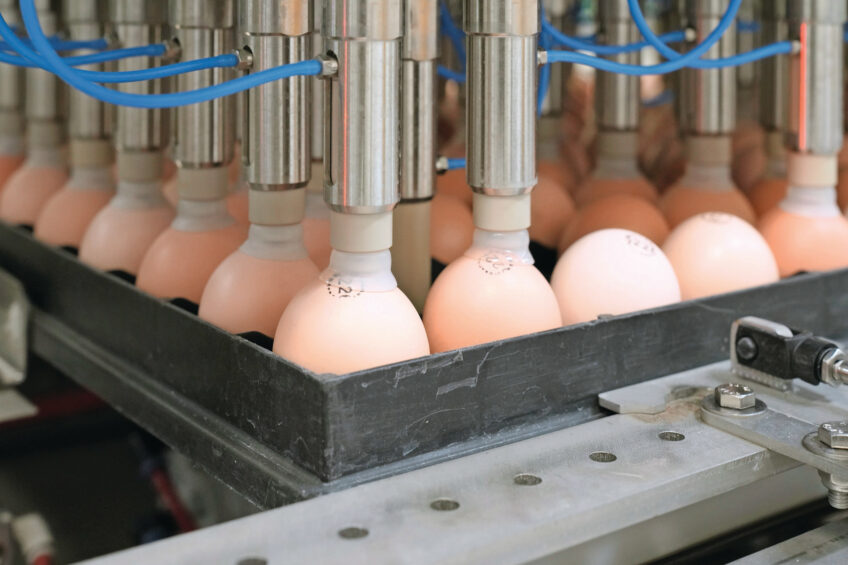
Studies show the most critical period in chick development is the perinatal period, which spans the last few days before hatching and the first few days after hatching. During this critical period, intestinal development occurs rapidly, and chicks undergo a metabolic and physiological shift from utilising egg nutrients to exogenous feed. However, the nutrient supply of the egg yolk may not be sufficient to support the late stage of embryonic development and provide energy for the hatching process. The development of in-ovo technology to deliver bioactive substances to chicken embryos during their development represents a way to adapt to the perinatal period, late embryonic development and post-hatch growth. Some studies have even shown that providing nanoparticles in-ovo is more effective than postnatal introduction of feed to growing chickens.
Great potential
The researchers concluded that harnessing nanotechnology offers excellent potential for the use of antibiotic alternatives in poultry production. They also emphasised that the safe and sustainable adoption requires the development of cost-effective green synthesis methods, global regulations, adequate supervision, and balanced management of production, marketing, use, and risk control, to ensure a positive impact on the environment, and animal and human health.