Belgian and French pig industries fear consequences of Chinese duties
The pig industry in both Belgium as well as France have expressed their worries after the recent Chinese announcement to impose import duties on European pork. Both fear financial consequences and a crisis situation. Meanwhile, the European Parliament is pushing for countermeasures.
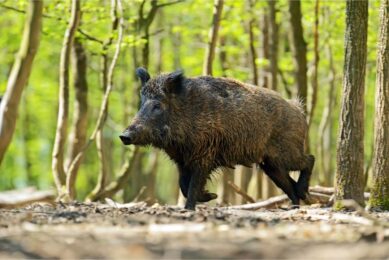
The Belgians have been given a percentage of 62.4% – which is the highest in the range of tariffs. For Spain, on the other hand, the levy is only 15%. Belgium is hardest hit because allegedly pork exporters apparently would not be cooperating with the Chinese authorities’ survey. The Belgian pork association Pork.be retorted that that was simply impossible. After all, in the reference year 2023 Belgium didn’t export any pork China because of the import ban related to ASF outbreaks in Belgium’s wild boar population in 2018. That ban was still in place in 2023.
Export of 15,000 tons of pork
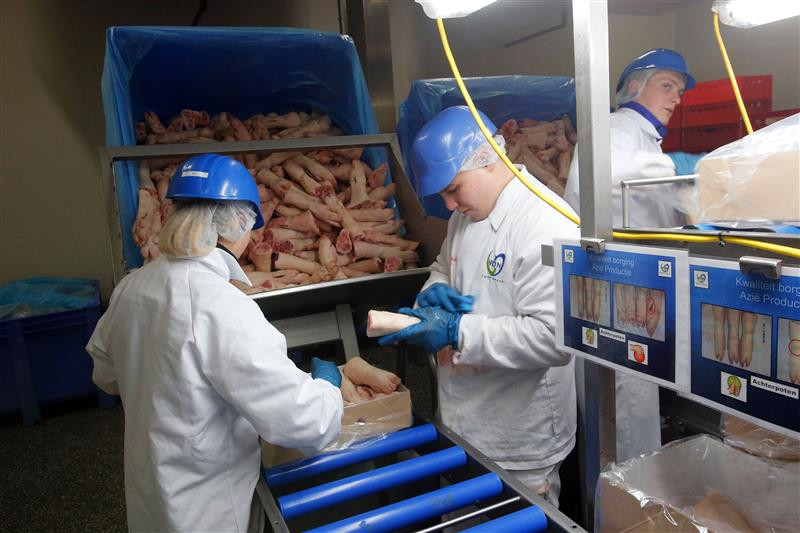
Normally, Belgium annually expects to export roughly 15,000 tons of pork and by-products to China, mainly products like ears and legs. The high duties could lead to a strong downward pressure on the pork prices in the country, the organisation said. On the day after the Chinese announcement, the Danis national reference price went down by €0.04.
Pork.be chairman Filip Fontaine said, “The new levies don’t just hit our exporters, they hit the full value chain, from farmer to abattoir and processor. For an open economy like ours, these kind of levies are extremely harmful.” He has asked the authorities in Belgium and the EU for a strong and rapid response “to repair the damage in the trade.” The earlier export ban led to a sharp decline of pig prices and, as a consequence, a severe crisis in the Belgian pig sector.
Total stop on the export of pork
The largest farmers union Boerenbond fears a repeat of that situation. In a news statement, the union said, “The high duty is in practice a total stop on the export of pork and other pig products to China. We support the call of Pork.be for a rapid dialogue between the Belgian or European and the Chinese authorities in order to solve this problem as soon as possible. It can’t be that farmers are the victim of international trade wars.’’
France: duties ranging from 20 to over 60%
At the opening of the annual trade show SPACE in Rennes, France, the French pork industry expressed serious concerns about the provisional anti-dumping duties imposed by China, fearing their consequences.
For the French pig industry, import duties can range from 20% to 62.4%, depending on the company. The pork organisation Inaporc has been warning for the “dramatic consequences” of this decision for the French pork industry. The implementation of these temporary taxes endangers the entire industry, the organisation writes in a press statement, pointing to the cognac (brandy) industry which experienced something similar recently. Farmers and businesses call on public authorities to resume negotiations with China with other European countries.
For France, the organisation wrote, is China is the leading importer of cuts not consumed, like trotters, ears, offal, etc. Last year, France exported 115,000 tons of pork to China. The decision might lead to a “boomerang effect” with more meat becoming available on the European market. The estimated cost to the French pork industry is estimated at between €200 and €400 million in losses, Inaporc wrote.
European Parliament: Time for action
Not only for the abovementioned countries, the Chinese measures come as an unpleasant surprise. Also the European Parliament has responded to the Chinese duties – and there’s a clear call to the European Commission to take action, so much became clear during debates in Strasbourg on Monday.
All political groups in the European Parliament have condemned China’s import duties. Parties from the left to the right of the political spectrum have been asking the Commission to submit the duties to the World Trade Organization (WTO) to verify whether they comply with WTO agreements. Many members of European Parliament (MEPs) consider China’s action as a countermeasure against the import duties imposed by the EU on Chinese electric cars. Political groups are deeply concerned that a segment of the food chain is being used in a trade dispute, especially now that the agricultural sector is already facing severe difficulties due to the trade agreements.
The Dutch MEP Jessika van Leeuwen even went as far to call on the European Commission to establish a crisis fund to compensate pig farmers for the loss of income caused by China’s measures. “The Commission must make it clear that it supports farmers and that they will not be abandoned.”
For the whole of Europe, exports in 2024 amounted to 1.4 million tons, with an export value of €2 billion.
Contributing author: Mariska Vermaas