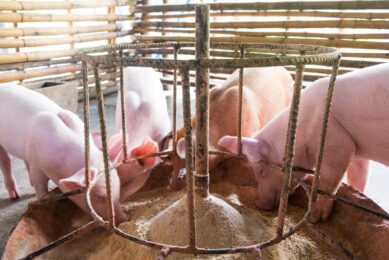
Do lupins offer a sustainable option to replace soybean meal?
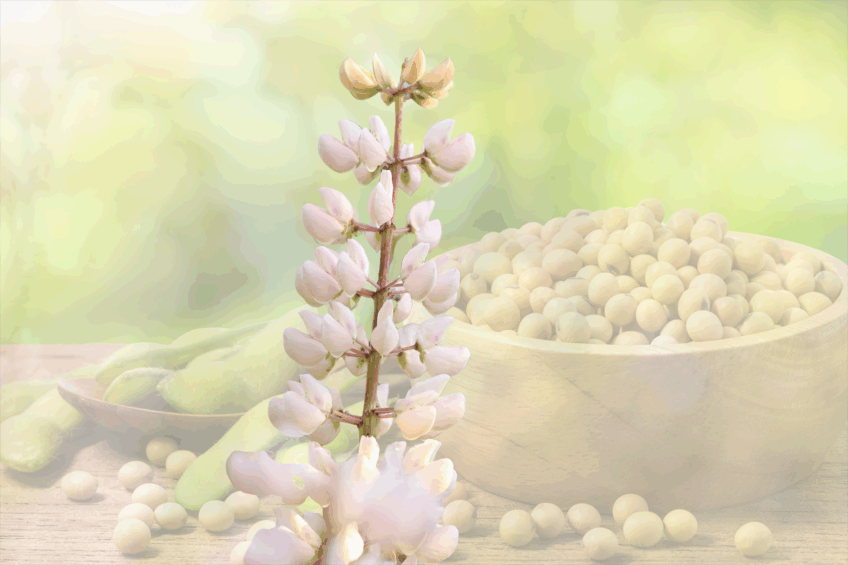
Researchers have found that white lupins could be used as a replacement of soybean meal in growing-finishing pigs’ diets, with significant improvements in the meat fatty acid profile and technological properties.
Although there are 300 species of lupins, only yellow, blue and white lupins can be fed to livestock, and in Europe, this has been generally confined to dairy cow and lamb diets. White lupins provide the highest metabolisable energy (15 MJ/kg dry matter).
Study objectives
The Romanian study investigated the possibility of partial replacement of genetically modified soybean meal with raw white lupin (WL) seeds in growing pigs’ diets and determined its impact on performance (body weight, average daily gain, and average daily feed intake), meat quality, and fatty acid profile.
A total of 54 male crossbred pigs (Topigs Large White × Norsvin Landrace) × Duroc, aged 12 weeks, with an initial average body weight of 30.30 kg ± 0.77 kg, were divided into 3 dietary groups of 18 piglets each.
The control group was fed a standardised soybean meal-based complete feed. In the experimental groups (WL1 and WL2), the soybean meal was replaced with increasing levels of white lupin seeds as follows:
Grower period (30-60 kg body weight):
- WL1: 5% white lupin seeds
- WL2: 10% white lupin seeds
Finisher period (61-110 kg body weight):
- WL1: 7% white lupin seeds
- WL2: 14% white lupin seeds
Diet formulation
All diets were formulated to be isocaloric and isonitrogenous with similar content of total lysine and sulphur amino acids, calcium, and available phosphorus. At the end of 83 days’ fattening trial, the animals were slaughtered. Longissimus dorsi muscle was sampled for analyses of the physicochemical traits.
Performance results
The results show that increasing the dietary raw white lupin concentration decreased final body weight (p=0.039), average daily gain (p<0.0001), and average daily feed intake (p=0.004) throughout the experimental period, especially in the second phase of feeding.
Blood and muscle traits in pigs
Dietary treatments did not affect the pigs’ blood biochemical constituents. Concerning longissimus dorsi muscle characteristics, the redness colour and collagen content was higher (p<0.0001) in the WL1/WL2 vs. control group.
There was a beneficial decrease in the values of some textural attributes (hardness, gumminess, chewiness, and resilience) of longissimus dorsi in the WL1/WL2 vs. control group.
Fatty acid profile
The use of white lupins had a significant effect on the content of fatty acids, especially for eicosapentaenoic (p=0.014) and n-3 PUFA (p=0.045), which were higher than those fed the control diet.
Conclusion
In conclusion, white lupins could be used as a replacement of soybean meal in growing-finishing pigs’ diets, with significant improvements in the meat fatty acid profile and technological properties.
*The study, ‘Effects of increasing dietary inclusion of white lupin on growth performance, meat quality, and fatty acid profile on growing-fattening pigs’ has been published in the Journal Agriculture.
Join 18,000+ subscribers
Subscribe to our newsletter to stay updated about all the need-to-know content in the pigsector, three times a week.